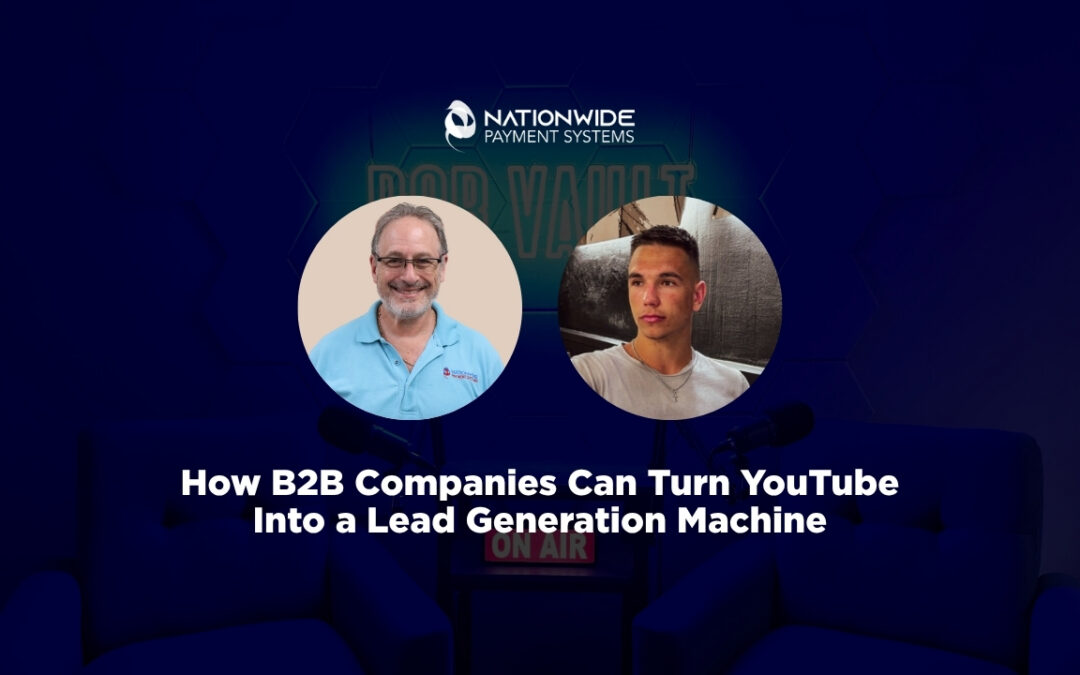
How B2B Companies Can Turn YouTube Into a Lead Generation Machine
Learn how B2B companies can turn YouTube into a lead generation channel with educational videos, expert strategy, and insights from Samu Kovacs.
Presented by Allen Kopelman, CEO — Nationwide Payment Systems-Host of B2B Vault: The Biz2Biz Podcast
AI OVERVIEW
B2B companies can generate leads from YouTube by creating educational, long-form videos that address the problems, questions, and goals of their ideal customers.
The strongest B2B YouTube strategies typically include:
- Clearly defining the ideal customer
- Selecting topics based on customer pain points
- Studying videos that have already performed well
- Creating compelling titles and thumbnails
- Structuring videos into simple, understandable steps
- Including relevant calls to action
- Publishing consistently over several months
- Measuring leads and revenue instead of views alone
For most B2B businesses, the goal is not to become broadly famous. The goal is to become niche famous among the specific people who could become customers, partners, or referral sources.
sponsored by

Meet Samu Kovacs
Samu Kovacs is a young entrepreneur who began working in video production as a teenager.
At approximately 16 years old, Samu began using his video-editing skills to earn money online. What started as freelance video editing eventually developed into an agency serving B2B companies, including agencies, software companies, and startups.
Through KS Media, Samu and his team help clients manage the complete YouTube content process, including:
- Channel strategy
- Topic research
- Video ideation
- Script development
- Editing
- Thumbnail creation
- Publishing strategy
- Lead-generation optimization
The objective is not simply to produce attractive videos. It is to establish each client as an authority within a specific market and turn YouTube into a reliable source of qualified leads.
Why YouTube Is Becoming More Important for B2B Marketing
When most people think about YouTube, they picture viral challenges, music videos, gaming channels, product demonstrations, or high-budget entertainment.
That creates an opportunity for B2B companies.
Many businesses are already competing aggressively on LinkedIn, through paid advertising, and with cold email outreach. YouTube is often overlooked, even though prospective customers are increasingly using the platform to research products, compare solutions, solve business problems, and learn from industry experts.
A company that appears repeatedly during that research process gains a significant advantage.
A prospective customer may first discover the business through a YouTube video. Later, the same person may see the company on LinkedIn, receive an email from a salesperson, visit its website, or encounter one of its advertisements.
Because the prospect has already spent time learning from the company, the brand is no longer completely unfamiliar. The videos help create recognition and trust before the first sales conversation occurs.
The Goal Is to Become Niche Famous
Most B2B companies do not need hundreds of thousands of subscribers.
A company selling specialized software, consulting, payment processing, cybersecurity, logistics, or professional services may only need to reach a relatively small group of qualified decision-makers.
That is why Samu describes the opportunity as becoming niche famous.
A business may never become known to the general public, but it can become highly recognizable within its specific industry.
For example, a software company serving medical practices may only need to become well known among practice owners, administrators, and healthcare executives. A payment company may want to reach chief financial officers, accounts receivable teams, software companies, restaurants, retailers, or businesses in regulated industries.
When the right people repeatedly see useful videos from a company, that company begins to become a trusted voice in its niche.
What Makes a Successful B2B YouTube Video?
A strong YouTube video begins long before the camera starts recording.
Samu explains that the topic itself may account for a large portion of a video’s success. Even an expertly produced video can perform poorly when the subject does not match what the target audience wants to learn.
A successful B2B video should be built around four central questions:
- Who is the company trying to reach?
- What problems does that audience need to solve?
- What outcomes does that audience want?
- What information can the company provide that moves the viewer closer to that outcome?
- The content should then be designed around those answers.
Start With the Ideal Customer
Before choosing video topics, a company needs to understand its ideal customer profile.
That includes more than a general industry category.
The company should identify:
- The types of businesses it wants to serve
- The roles involved in the buying decision
- The problems those decision-makers face
- The questions they ask during the sales process
- The objections that prevent them from moving forward
- The results they are trying to achieve
Once those details are clear, the business can create videos that directly address those needs.
A cold-email software company, for example, might create videos about:
- How to start a cold-email campaign
- Common cold-email mistakes
- Cold-email compliance
- How to improve deliverability
- How to personalize outreach
- How to select cold-email software
- The best cold-email strategies for the current year
The company is not merely trying to attract people who enjoy marketing content. It is trying to attract businesses that may eventually need its platform.
Study What Is Already Working
One of Samu’s strongest recommendations is to avoid reinventing the wheel.
YouTube already provides an enormous amount of data. Businesses can research successful channels, identify videos that significantly outperformed a creator’s normal content, and analyze why those topics worked.
This does not mean copying another creator’s video.
It means studying:
- Successful topic formats
- Frequently searched questions
- High-performing titles
- Thumbnail concepts
- Video structures
- Emerging industry conversations
- Topics gaining traction on other platforms
A company can then adapt those ideas to its own industry, experience, customers, and point of view.
The business should add original expertise, examples, stories, and recommendations. The underlying topic may already be proven, but the value comes from how the company applies it to its own audience.
Look for Outlier Topics
An outlier video is a video that performs significantly better than the channel’s typical content.
These videos can reveal topics that have unusually strong demand.
Samu described a client in the cold-email industry who identified an emerging topic gaining attention on LinkedIn. Very few people had created YouTube content about it, so the client published a video while the subject was still gaining momentum.
The video reportedly generated more than 50 sales calls directly from YouTube. The content was then adapted into LinkedIn and X posts, which also became high-performing content.
Across the different channels, the original topic may have contributed to more than 100 sales calls.
The lesson is not that every video will create that type of result. The lesson is that businesses should watch for emerging questions and publish valuable content before a topic becomes crowded.
Titles and Thumbnails Matter
A video cannot educate or convert a viewer unless someone clicks on it.
The title and thumbnail work together to communicate the topic and create enough curiosity to earn that click.
A strong title should clearly promise a useful outcome.
Examples include:
- How to Reduce B2B Payment Processing Costs
- Five Accounts Receivable Problems Hurting Your Cash Flow
- How to Choose a Payment Gateway for Your SaaS Platform
- Seven Chargeback Mistakes Business Owners Should Avoid
- How to Automate Invoicing Without Replacing QuickBooks
- What to Do After Your Merchant Account Is Shut Down
The thumbnail should support the title without revealing the entire conclusion. It should make the topic easy to understand while giving the viewer a reason to learn more.
For B2B companies, clarity is usually more important than excessive graphics, dramatic facial expressions, or visual clutter.
Structure Videos Into Clear Steps
Educational videos are easier to follow when the information is organized into a simple framework.
That is why many successful videos use titles and structures such as:
- Three steps
- Five mistakes
- Seven strategies
- A complete beginner’s guide
- What to do before applying
- How to compare two options
The format gives viewers a roadmap and helps them understand where the discussion is going.
A B2B video might follow this structure:
Opening Hook
Explain the problem and why it matters.
Overview
Tell viewers what they will learn.
Main Educational Sections
Break the information into steps, mistakes, examples, or recommendations.
Real-World Example
Show how the concept applies to an actual business situation.
Call to Action
Invite viewers to download a resource, visit the website, schedule a consultation, subscribe, or watch another related video.
The goal is not to manipulate viewers. The goal is to make useful information easy to consume and connect interested prospects with the next logical step.
Why Long-Form Video Works Better for B2B
Short-form videos can generate attention, but Samu has found that they are less reliable for generating B2B leads.
People watching short videos are often in scrolling mode. They may consume dozens of clips without developing a meaningful connection with any single creator or business.
Long-form viewers are more likely to be in learning or research mode.
An eight- to 15-minute video gives a company enough time to:
- Explain a complicated issue
- Demonstrate expertise
- Present a framework
- Share a customer example
- Address common objections
- Build familiarity and trust
- Encourage the viewer to take action
Some topics may require longer videos, but Samu considers approximately eight to 15 minutes a strong target for many educational B2B videos.
Educational Content Beats Overproduction
Business owners do not necessarily need elaborate studios, cinematic editing, explosions, or expensive visual effects.
In many B2B industries, a straightforward educational video may perform extremely well.
Effective formats include:
- An expert speaking directly to the camera
- Screen-sharing demonstrations
- Slide presentations
- Software walkthroughs
- Loom-style explanations
- Case-study breakdowns
- Podcast interviews
- Whiteboard explanations
- Frequently asked question videos
The production should remain clear and professional, but the primary objective is helping the viewer understand the subject.
The editing should support the message rather than distract from it.
Will AI-Generated Video Replace Human Experts?
Artificial intelligence can help companies research topics, organize ideas, edit footage, create captions, summarize transcripts, and accelerate the content production process.
However, Samu believes fully AI-generated presenters and faceless videos are less effective for building B2B trust.
Business buyers want to hear from people with actual experience.
They want:
- Original opinions
- Firsthand stories
- Customer examples
- Industry knowledge
- Credible results
- Practical recommendations
- A person they can potentially trust and work with
A synthetic presenter may be able to repeat information, but it cannot automatically reproduce the credibility of an experienced operator.
As AI-generated content becomes more common, authentic expert-led content may become even more valuable.
The best use of AI may be behind the scenes: improving workflows while allowing the business owner, executive, or subject-matter expert to remain the voice and face of the content.
Consistency Is Essential
YouTube is generally not a two-week marketing strategy.
Samu advises businesses to view it as a long-term investment.
A new channel may take approximately three months to begin creating meaningful traction when the business starts with a strong strategy. Companies with an established audience may see results sooner.
The larger benefits may develop over six to 12 months as the video library expands.
This happens because YouTube content can compound.
A useful video published today may continue generating:
- Search traffic
- Suggested-video traffic
- Website visits
- Leads
- Sales conversations
- Brand recognition
Each new video creates another opportunity for a prospective customer to discover the company.
This is different from many social posts, where visibility may decline rapidly after publication.
Stop Measuring Only Views and Subscribers
Views and subscribers can be useful indicators, but they are not the ultimate measurement of B2B success.
A highly targeted video with 500 views could generate more revenue than a broad video with 50,000 views.
The better questions are:
- Did the video reach the right audience?
- Did it generate qualified website visits?
- Did viewers schedule consultations?
- Did it create demo requests?
- Did prospects mention the content during sales calls?
- Did it shorten the sales cycle?
- Did it help close existing opportunities?
- Did it influence revenue?
A B2B company should not automatically chase the broadest possible audience.
In some cases, unusually high views may indicate that the content is attracting people outside the company’s intended market.
Qualified attention is more valuable than mass attention.
Use YouTube Content Across Multiple Channels
One well-planned video can become the foundation for an entire content campaign.
A long-form YouTube video can be repurposed into:
- LinkedIn posts
- Blog articles
- Email newsletters
- Podcast clips
- Sales enablement materials
- Website FAQs
- Social media videos
- Customer education resources
- Training content
- X posts or threads
This allows the company to get more value from the original topic.
The strategy also creates consistency across the company’s marketing. Prospective customers may encounter the same central idea in several formats, helping reinforce the message and strengthen brand recognition.
Tools for Researching B2B YouTube Topics
During the interview, Samu mentioned two tools his agency uses to study YouTube performance and identify content opportunities.
vidIQ
vidIQ is a YouTube research and optimization platform that provides creators with additional channel and video data.
It can help users evaluate:
- Video performance
- Keywords
- Competitor channels
- Topic opportunities
- View velocity
- Outlier performance
- Channel trends
1 of 10
1 of 10 is designed to help creators discover outlier videos and topic patterns.
Businesses can use outlier research to find videos that performed substantially better than a channel’s normal content and explore whether a similar topic could be adapted to their market.
These tools do not replace strategy or expertise, but they can make content research more informed.
Five YouTube Tips for B2B Business Owners
-
Start With Proven Topics
Study what is already working in your market and in adjacent industries. Adapt successful formats instead of starting every idea from scratch.
-
Provide Real Value
Surface-level content is easy to ignore. Give viewers useful information they can understand and apply.
-
Speak to a Specific Customer
Avoid making videos for “everyone.” Create content for the people most likely to need your product or service.
-
Measure Leads Instead of Vanity Metrics
Track calls, demos, sign-ups, qualified traffic, and influenced revenue—not just subscribers and likes.
-
Commit to the Long Game
Publish consistently and allow the content library time to compound. One strong video may continue creating opportunities long after it is released.
YouTube Content Ideas for B2B Companies
Business owners frequently struggle to decide what to discuss on camera.
The best starting point is often the conversations already happening with customers.
Potential topics include:
- Questions prospects ask during sales calls
- Common customer mistakes
- Industry myths
- Product comparisons
- Pricing explanations
- Compliance updates
- Case studies
- Software demonstrations
- Implementation guides
- Buyer checklists
- Industry predictions
- Common objections
- Lessons from failed projects
- Behind-the-scenes processes
- Interviews with customers or industry experts
A business does not need to invent an entirely new subject every week. It needs to explain important subjects more clearly and usefully than its competitors.