Shopping Is No Longer Just About Going to a Store
For decades, retail followed a fairly predictable model.
A consumer needed something.
They drove to a store.
They walked through the aisles.
They compared the products available on the shelf.
Then they made a purchase.
Today, the shopping journey can start almost anywhere.
Google.
Amazon.
Instagram.
TikTok.
YouTube.
Reddit.
An AI assistant.
A retailer's mobile app.
A browser extension.
A recommendation from a creator.
Or a shopping and savings platform.
Consumers can compare products before ever leaving their homes.
And increasingly, they can compare products while they are standing inside the store.
That is one of the ideas behind SpotBooker and its consumer savings tools.
Instead of forcing shoppers to search through multiple websites, coupon pages, retailers, and apps, technology can help bring that information closer to the moment when a consumer is ready to buy.
What Is SpotBooker?
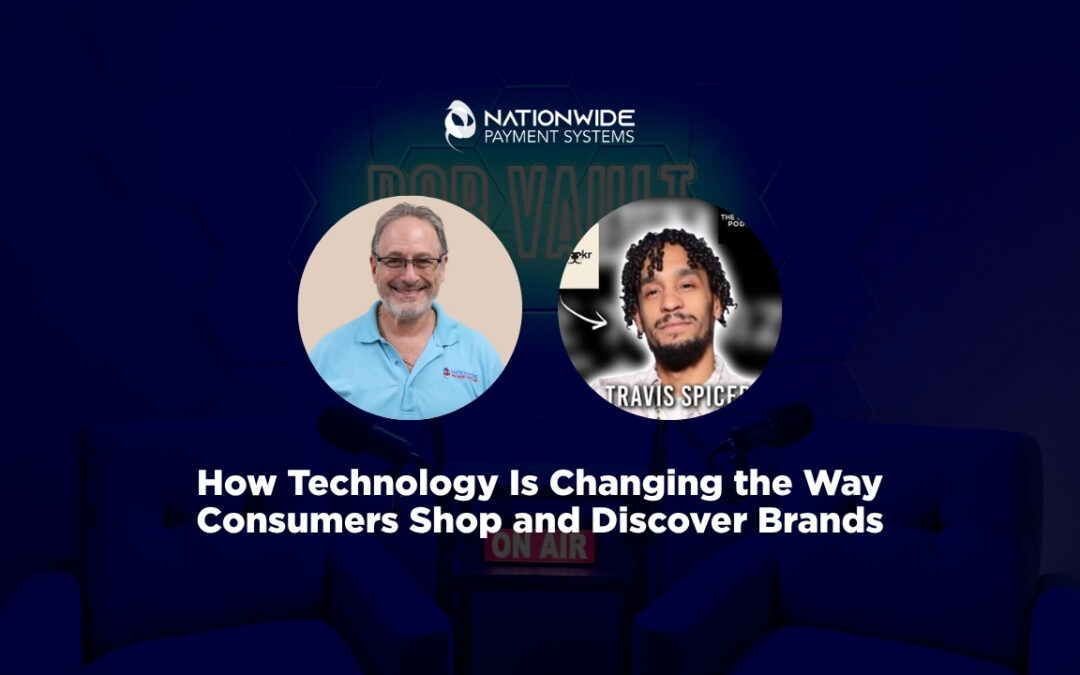
During the B2B Vault conversation, Travis explained that SpotBooker's technology is designed around a simple idea:
Help consumers save money.
The platform has been developed across mobile and browser-based experiences, giving consumers different ways to find deals and savings.
One function can automatically look for discount codes during online checkout.
Another lets consumers discover offers in a feed-style environment.
The mobile experience also incorporates barcode scanning, allowing shoppers to scan eligible products and compare information and pricing across retailers.
Imagine standing inside a store looking at an item.
Instead of assuming the price in front of you is the best available price, your phone can become another shopping tool.
The broader idea is important even beyond SpotBooker itself:
Price transparency is becoming part of the shopping experience.
The Smartphone Has Become a Shopping Assistant
Consumers already carry an extremely powerful shopping device everywhere they go.
Their phone.
It can tell them:
-
Where a product is sold.
-
What another retailer charges.
-
Whether a coupon exists.
-
What customers think about it?
-
Whether another version is available.
-
Whether the product can be delivered.
-
Whether a nearby store has inventory.
And increasingly, technology can perform these searches without requiring shoppers to manually open ten different browser tabs.
This changes the relationship between merchants and consumers.
A retailer is no longer competing only with the store across the street.
They may be competing with:
-
A national chain.
-
An online retailer.
-
A marketplace seller.
-
A local business.
-
A direct-to-consumer company.
-
A used-product marketplace.
-
Or a brand the customer had never even heard of five minutes earlier.
Consumers Still Love a Deal
Economic conditions are changing.
Consumer confidence changes.
Shopping habits change.
But one thing remains surprisingly consistent:
People like saving money.
Some businesses make the mistake of assuming that shoppers interested in discounts are only price-sensitive consumers.
That is not necessarily true.
People with significant disposable income still compare prices.
Business owners compare prices.
Executives compare prices.
High-income consumers use credit-card rewards.
Companies negotiate supplier agreements.
Everyone likes feeling that they receive value.
Saving money is not necessarily about buying the cheapest product.
It is about making a better-informed buying decision.
The Opportunity for Smaller Brands
One of the more interesting parts of the conversation involved smaller and independent brands.
For years, one of the biggest challenges facing small brands was distribution.
Large companies controlled:
-
Shelf space.
-
Retail relationships.
-
Advertising.
-
Television.
-
Print.
-
Distribution networks.
-
And consumer attention.
The internet began changing that.
Social media accelerated it.
Now shopping platforms, creator marketing, marketplaces, and direct-to-consumer technology are creating additional ways for independent brands to reach customers.
A small apparel company, specialty manufacturer, niche retailer, or online brand does not necessarily need stores across the country.
It needs a way to be discovered.
That's a major distinction.
Discovery May Be More Important Than Location
The old retail rule was:
Location, location, location.
Location still matters.
But digital commerce adds another concept:
Discovery, discovery, discovery.
-
Can people find your product?
-
Can search engines understand what you sell?
-
Can AI engines understand your company?
-
Can consumers discover you through social media?
-
Can creators introduce your product to an audience?
-
Can shopping platforms find your inventory?
-
Does your product information clearly explain what you sell?
A business could have an incredible product at an excellent price and still struggle if consumers never discover it.
Technology is increasingly becoming the bridge between the consumer and brands they may never have encountered otherwise.
Small Brands Are Competing for Attention
Launching a brand today is easier than it was twenty years ago.
Growing one is not necessarily easier.
A business owner can create:
-
A Shopify store.
-
A website.
-
An Instagram account.
-
A TikTok account.
-
A Facebook page.
-
A YouTube channel.
-
An email campaign.
-
And paid advertising.
The problem is that millions of other businesses can do exactly the same thing.
Now every brand is competing for attention.
That means business owners need multiple paths to discovery.
That might include:
-
Search engines
-
Social media
-
AI search
-
Shopping platforms
-
Creator partnerships
-
Affiliate programs
-
Email
-
Paid advertising
-
Podcast appearances
-
Marketplaces
-
Organic content
-
Product feeds
-
Customer referrals
There is rarely one magic marketing channel anymore.
Creators Are Becoming Part of Commerce
One major change in modern marketing is the role of the creator.
Creators can include:
A creator may have a smaller audience than a celebrity while still having enormous influence inside a particular niche.
That makes creator partnerships increasingly interesting for smaller brands.
Instead of paying for broad exposure to millions of people who may never purchase the product, a company can potentially reach an audience already interested in its category.
SpotBooker is also developing a creator network intended to connect brands with creators who fit particular audiences.
That could become increasingly valuable as companies look for ways to reach more specific groups of buyers.
Intentional Shoppers Are Extremely Valuable
There is a major difference between someone casually scrolling social media and someone actively looking to buy something.
One is an audience.
The other may be a customer.
That is why shopping-intent data can be valuable.
If someone is actively:
They are much closer to a transaction.
For businesses, understanding purchase intent can be more valuable than simply generating impressions.
Ten thousand people seeing your advertisement sounds impressive.
But 100 people actively shopping for your type of product may represent a better opportunity.
Online and In-Store Shopping Are Blending Together
People sometimes talk about e-commerce and brick-and-mortar retail as if they are completely separate.
Consumers do not always see it that way.
A person may:
That is an omnichannel buying experience.
The lines between physical and digital commerce continue to blur.
Successful merchants should assume that customers may be researching their products in real time.
Convenience Is Part of the Product
Consumers do not evaluate only the product.
They evaluate the experience.
How easy is it to:
-
Find the product?
-
Understand the price?
-
Order it?
-
Pay for it?
-
Receive it?
-
Return it?
-
Reach customer service?
-
Get a refund?
-
Buy again?
The companies that make these steps easy can create a competitive advantage.
The companies that create unnecessary friction can lose customers even when their underlying product is excellent.
Your Return Policy Is Part of Your Customer Experience
Allen and Travis also discussed online returns.
Returns can be frustrating for merchants.
They cost money.
Shipping costs money.
Restocking products costs money.
Fraudulent returns exist.
But a merchant's return policy also affects whether customers feel comfortable purchasing in the first place.
This is especially true online.
A customer cannot always:
That uncertainty makes the merchant's policies extremely important.
Businesses should clearly disclose:
-
Return policies.
-
Refund policies.
-
Shipping policies.
-
Cancellation policies.
-
Delivery expectations.
-
Subscription terms.
-
And contact information.
Good policies protect the business and set expectations for customers.
Bad Policies Can Become a Payments Problem
This is where retail operations cross directly into payment processing.
A merchant may think a return policy is simply a customer-service decision.
But poor customer service and unclear policies can eventually create chargebacks.
For example:
-
A customer receives the wrong product.
-
The merchant will not respond.
-
The customer cannot find a phone number.
-
The company refuses a legitimate return.
-
The refund never arrives.
-
The customer disputes the transaction with their card issuer.
Now a customer-service problem has become a payment dispute.
Too many disputes can become much more serious.
Businesses need to understand that payment processing does not operate separately from the rest of the customer experience.
Your:
can all affect your chargeback risk.
You Live and Die by Your Business Policies
One point Allen regularly discusses with merchants is the importance of policies.
Businesses need policies that are:
-
Clear.
-
Reasonable.
-
Visible.
-
Consistent.
-
And enforceable.
That does not mean saying yes to every customer request.
It means establishing expectations before the transaction happens.
The worst time for a customer to discover a company's policy is after something has already gone wrong.
Clearly communicated policies can help reduce misunderstandings and improve customer satisfaction.
Technology Should Automate the Right Things
Another interesting part of Travis's business philosophy involved automation.
SpotBooker uses technology to automate many functions that make sense to automate.
-
Product indexing.
-
Data organization.
-
Matching.
-
Searching.
-
Updating offers.
Those are tasks machines can perform efficiently.
But Travis also emphasized maintaining human interaction in areas where relationships matter.
That is an increasingly important lesson as companies race toward AI and automation.
Not every business process needs to become a chatbot.
The better question is:
Which tasks should technology handle, and where does human interaction create more value?
Automate repetitive work.
Keep people involved where trust, relationships, judgment, and creativity matter.
Shopping Technology Creates Opportunities for Merchants Too
Consumer shopping technology is usually described from the shopper's point of view.
But there is another side.
Businesses gain another channel for getting products in front of buyers.
For example, independent brands may benefit from platforms that can:
The result is another potential customer-acquisition channel.
That can be particularly valuable to businesses that do not have massive advertising budgets.
Commerce Is Becoming More Fragmented
Twenty years ago, businesses might have concentrated their advertising on:
-
Television.
-
Radio.
-
Newspapers.
-
Yellow Pages.
-
Direct mail.
Today consumer attention is scattered across dozens of platforms.
-
One customer may spend most of their time on TikTok.
-
Another uses YouTube.
-
Another searches Google.
-
Another asks ChatGPT.
-
Another checks Reddit.
-
Another watches Twitch.
-
Another discovers products through Amazon.
-
Another follows creators.
There is no single customer-discovery channel that works for every business.
That makes owning your digital presence increasingly important.
Don't Build Your Entire Business on Someone Else's Platform
There is another lesson hidden inside the conversation.
Businesses should be careful about depending entirely on one third-party platform.
If your entire business depends on:
-
Instagram.
-
TikTok.
-
Google.
-
Amazon.
-
Facebook.
-
Or another marketplace,
you do not control the relationship.
Algorithms change.
Advertising costs change.
Policies change.
Accounts get suspended.
Reach changes.
Platforms come and go.
Building direct relationships with customers through your website, email list, applications, loyalty programs, and other owned channels can create long-term value.
Your Checkout Experience Matters
All roads eventually lead to the transaction.
A business can spend enormous amounts of money on:
-
Marketing.
-
Content.
-
Advertising.
-
Influencers.
-
SEO.
-
Social media.
-
And product development.
Then lose the customer at checkout.
Customers increasingly expect payment to be fast and convenient.
Depending on the business, modern payment options can include:
-
Credit cards
-
Debit cards
-
ACH
-
Digital wallets
-
Payment links
-
Online checkout
-
Mobile payments
-
Recurring billing
-
Invoices
The easier businesses make it to complete a legitimate transaction, the less friction exists between interest and revenue.
Payments Are Part of the Customer Experience
Nationwide Payment Systems works with businesses to modernize the transaction side of commerce.
Payment processing is not simply about moving money from a customer's card to a merchant's bank account.
The technology can affect:
-
Checkout.
-
Reporting.
-
Accounting.
-
Recurring revenue.
-
Billing.
-
Accounts receivable.
-
Customer convenience.
-
Chargeback management.
-
Fraud prevention.
-
And overall operations.
Whether a company operates online, in a physical store, through invoices, or across multiple channels, the payment experience should fit the way customers actually want to buy.
What Businesses Can Learn From the New Shopping Economy
The biggest takeaway from this B2B Vault conversation is not simply that consumers want coupons.
The bigger story is that consumers are becoming more empowered.
They have information.
They have choices.
They have technology.
They have reviews.
They have creators.
They have price-comparison tools.
They have AI.
They can find alternatives almost instantly.
Businesses cannot prevent that.
Instead, successful companies should embrace it.
-
Make your product easy to discover.
-
Make your value clear.
-
Make your policies understandable.
-
Make customer service accessible.
-
Make checkout easy.
-
And give customers a reason to come back.
About Travis Spicer
Travis Spicer is the founder behind SpotBooker, a technology platform focused on helping consumers discover savings while creating new opportunities for brands and creators.
His background includes audio engineering, media production, marketing, technology, content creation, and software development.
SpotBooker's evolving ecosystem includes consumer savings tools, browser functionality, product discovery, barcode-based shopping tools, creator relationships, and opportunities for businesses to increase product visibility.
About B2B Vault: The Biz to Biz Podcast
B2B Vault: The Biz to Biz Podcast is hosted by Allen Kopelman, CEO and co-founder of Nationwide Payment Systems.
The podcast features conversations with entrepreneurs, founders, executives, technology companies, fintech leaders, sales professionals, marketers, and other business innovators.
Topics include:
-
Entrepreneurship.
-
Payments.
-
Fintech.
-
Technology.
-
Artificial intelligence.
-
Sales.
-
Marketing.
-
E-commerce.
-
Fraud.
-
Compliance.
-
And business growth.
B2B Vault is sponsored by Nationwide Payment Systems.