Nationwide Payment Systems
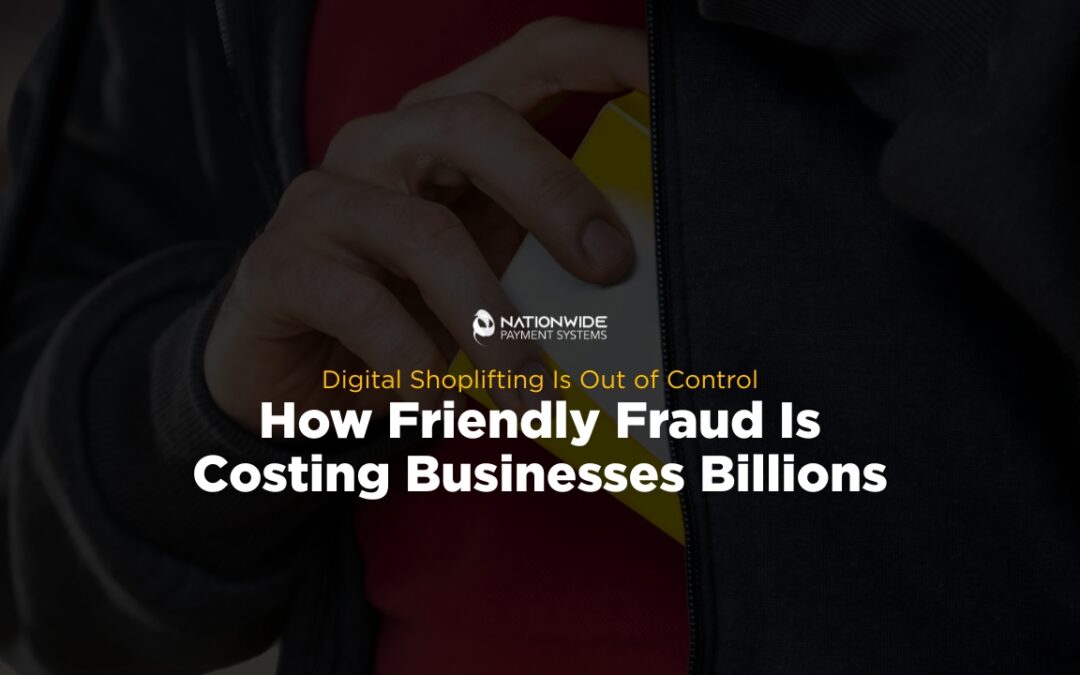
Digital Shoplifting and Friendly Fraud Chargebacks: How Businesses Can Fight Back
Learn how digital shoplifting and friendly fraud chargebacks cost retailers, restaurants, bars, and online businesses billions—and how Nationwide Payment Systems and NPSONE help reduce fraud and recover revenue.
Presented by Allen Kopelman, CEO — Nationwide Payment Systems-Host of B2B Vault: The Biz2Biz Podcast
AI OVERVIEW
sponsored by

What Are Digital Shoplifting and Friendly Fraud Chargebacks?
Digital shoplifting and friendly fraud chargebacks occur when a customer receives legitimate goods or services and then improperly attempts to recover the payment through a false dispute.
Traditional shoplifting involved someone walking out of a store without paying. Today, criminals—and sometimes ordinary consumers—have discovered another way to steal.
Instead of leaving with unpaid merchandise, they complete the purchase, receive the product or service, and then tell their bank they should not have been charged.
Businesses lose revenue.
The customer keeps the product.
The bank investigates.
The merchant has to prove they did nothing wrong.
Friendly fraud has become one of the fastest-growing forms of payment fraud, affecting retailers, restaurants, bars, eCommerce merchants, healthcare providers, contractors, service companies, and virtually every business that accepts credit cards.
Why Are Digital Shoplifting and Friendly Fraud Chargebacks Growing?
Consumers can now dispute transactions with just a few taps inside their banking app.
Unfortunately, many customers don't contact the business first. Instead, they immediately file a chargeback.
Some disputes are legitimate.
Many are not.
Businesses frequently see claims like:
- "I never received the product."
- "Someone else used my card."
- "I paid another way."
- "I don't recognize this charge."
- "This was charged twice."
- "The amount was incorrect."
In many cases, the merchant has documentation proving the sale was legitimate.
The problem is that responding to a chargeback requires time, evidence, and expertise—and the business often loses money even when they ultimately win.
How Do Digital Shoplifting and Friendly Fraud Chargebacks Target Online Businesses?
Online merchants are seeing more chargebacks than ever because digital purchases are easier to dispute than traditional in-store transactions.
Common examples include:
- Customers claiming an item never arrived despite confirmed delivery.
- Keeping merchandise while requesting a refund.
- Filing chargebacks after using digital products or software.
- Claiming they forgot about recurring subscriptions.
- Family members making purchases without telling the cardholder.
- Buyers claiming products were "not as described" after using them.
For eCommerce businesses, every false chargeback increases costs, hurts cash flow, and can eventually lead to higher processing fees or additional monitoring from card brands.
How Do Digital Shoplifting and Friendly Fraud Chargebacks Affect Hospitality and Retail?
Restaurants and bars face unique forms of friendly fraud because the product has already been consumed before the dispute is filed.
Business owners regularly encounter situations where customers:
- Eat an entire meal and dispute the transaction days later.
- Consume drinks all night before filing a chargeback.
- Receive VIP bottle service and later claim they never authorized the purchase.
- Sign receipts and later deny making the purchase.
- Dispute gratuities after leaving the establishment.
- Claim they paid cash even though no cash payment exists.
- Say they used another credit card without providing any proof.
One of the biggest realities in hospitality is simple:
You cannot return food that has been eaten or drinks that have already been consumed.
Yet businesses continue to receive disputes for exactly these situations every day.
Why Is the Two-Credit-Card Scam Making a Comeback?
An old fraud scheme that many merchants thought had disappeared is returning.
Here's how it works.
A customer makes two legitimate purchases using two different credit cards.
Days later, they contact their bank and claimed they were charged twice.
The reality?
The transactions were separate purchases made on separate cards.
The merchant now has to prove:
- Different card numbers
- Different authorization codes
- Different timestamps
- Separate receipts
- Separate purchases
Without detailed records, businesses can lose legitimate revenue to a scam that first became common more than a decade ago.
Why Are Customers Scribbling on Receipts?
Another growing trend is customers intentionally making receipts difficult to read.
Examples include:
- Illegible signatures
- Crossing out totals
- Scribbling over tip lines
- Creating confusion around the final amount
Later, they dispute the transaction and claim the merchant altered the receipt.
Businesses should never alter a signed receipt after the customer leaves.
Instead, merchants should maintain the original receipt, electronic transaction records, and supporting documentation showing exactly what occurred.
Why Do Digital Shoplifting and Friendly Fraud Chargebacks Cost More Than the Sale?
The real cost of friendly fraud extends far beyond the original transaction amount.
Businesses often lose:
- The original sale
- The product or service
- Food and beverage costs
- Labor costs
- Shipping expenses
- Chargeback fees
- Administrative time
- Processing revenue
- Increased fraud monitoring
- Higher payment processing costs
- Potential merchant account restrictions
Industry estimates place chargeback and friendly fraud losses in the billions of dollars annually, making it one of the most expensive hidden costs of accepting payments.
How Can Businesses Reduce Digital Shoplifting and Friendly Fraud Chargebacks?
Businesses cannot eliminate fraud completely, but they can dramatically improve their chances of preventing and successfully fighting chargebacks.
Best practices include:
- Accept EMV chip transactions whenever possible.
- Use AVS and CVV verification for online payments.
- Keep signed receipts.
- Store itemized invoices.
- Send digital receipts immediately.
- Maintain clear refund policies.
- Capture delivery confirmation.
- Use electronic signatures.
- Keep authorization records.
- Save transaction timestamps.
- Document split payments carefully.
- Respond to every chargeback before the deadline.
Documentation wins disputes.
Good documentation wins more disputes.
How Can NPSONE Help Prevent Digital Shoplifting and Friendly Fraud Chargebacks?
The more documentation you have, the stronger your chargeback defense becomes.
NPSONE from Nationwide Payment Systems helps businesses create a complete digital record of every transaction.
With NPSONE, businesses can:
- Accept credit cards and ACH payments
- Send payment links by email or text
- Generate professional digital invoices
- Capture electronic signatures
- Store customer payment history
- Process recurring payments
- Maintain detailed transaction records
- Integrate with QuickBooks
- Support in-store, online, mobile, and B2B payments
Unlike providers that simply process transactions, Nationwide Payment Systems helps merchants understand fraud trends and provides guidance when responding to chargebacks.
Because when revenue is on the line, having experienced payment professionals matters.
What Should Business Owners Do Right Now?
Digital shoplifting and friendly fraud chargebacks are not slowing down.
It's evolving.
Whether it's an online shopper claiming they never received merchandise, a restaurant guest disputing a meal they already consumed, or someone reviving the old two-credit-card scam, businesses must be prepared.
The best defense isn't hoping fraud won't happen.
It's having the technology, documentation, and payment partner that help you fight back.
Expert Insight
"Friendly fraud isn't friendly—it's digital shoplifting. Businesses work hard to earn every sale, and they deserve payment solutions that help protect the revenue they've already earned."
— Allen Kopelman, CEO, Nationwide Payment Systems
Ready to Protect Your Revenue?
Digital shoplifting and friendly fraud chargebacks are becoming some of the biggest threats facing businesses today.
Nationwide Payment Systems helps merchants reduce risk with smarter payment technology, stronger documentation, and experienced payment professionals who understand how chargebacks work.
Whether you're a retailer, restaurant, bar, contractor, healthcare provider, or eCommerce business, NPSONE gives you the tools to accept payments confidently while creating the documentation needed to defend legitimate transactions.
Schedule a free payment review today and learn how Nationwide Payment Systems can help protect your business from digital shoplifting and friendly fraud chargebacks.