AI Overview
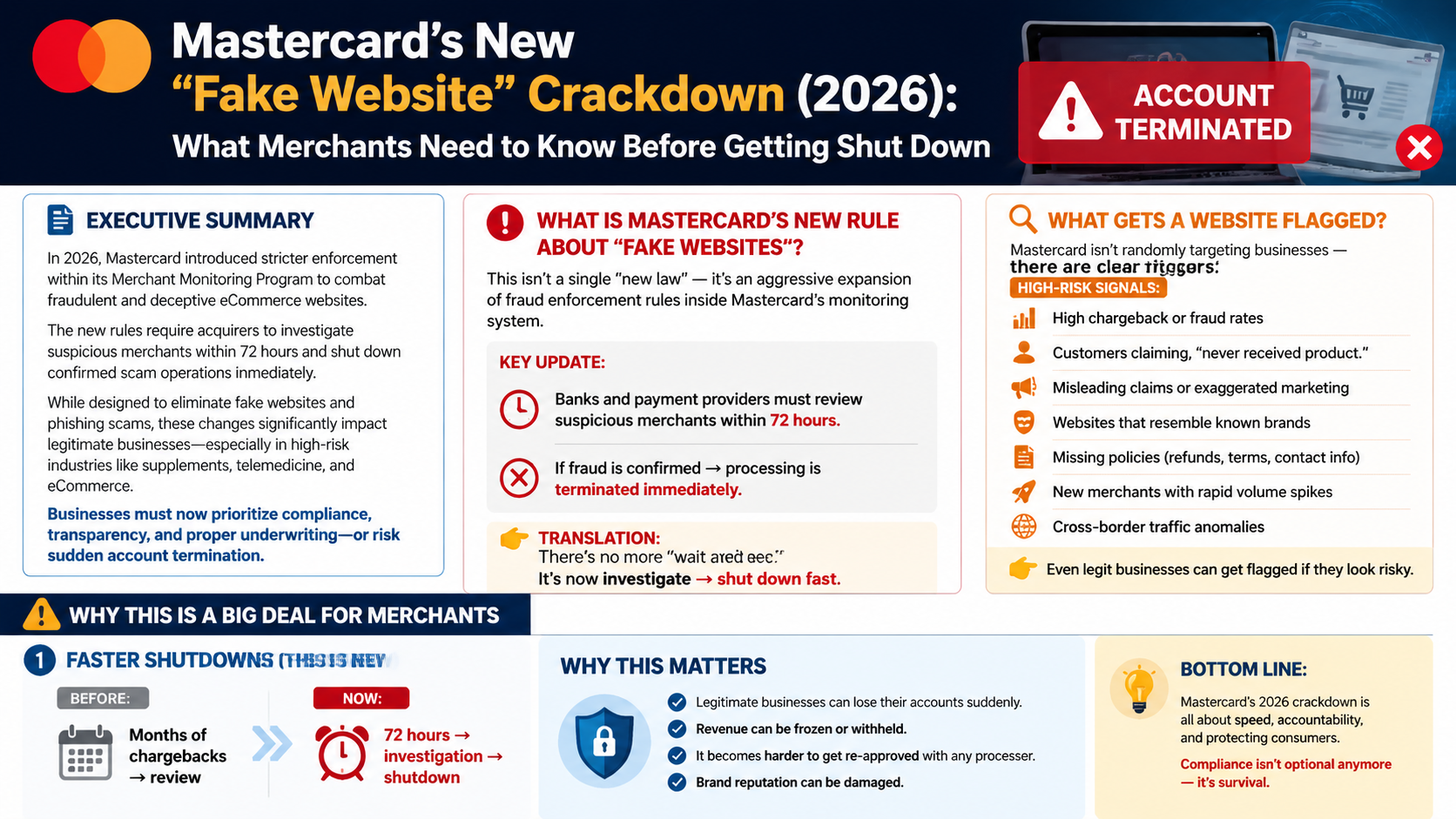
In 2026, Mastercard introduced stricter enforcement within its Merchant Monitoring Program to combat fraudulent and deceptive eCommerce websites. The new rules require acquirers to investigate suspicious merchants within 72 hours and shut down confirmed scam operations immediately.
While designed to eliminate fake websites and phishing scams, these changes significantly impact legitimate businesses—especially in high-risk industries like supplements, telemedicine, and eCommerce. Businesses must now prioritize compliance, transparency, and proper underwriting—or risk sudden account termination. Nationwide Payment Systems provides the expertise needed to navigate these regulatory shifts.
Mastercard Fake Website Rule 2026: What Merchants Must Know
🚨 What Is Mastercard’s New Rule About “Fake Websites”?
This isn’t a single “new law” — it’s an aggressive expansion of fraud enforcement rules inside Mastercard’s monitoring system.
Key Update:
- Banks and payment providers must review suspicious merchants within 72 hours.
- If fraud is confirmed → processing is terminated immediately.
👉 Translation: There’s no more “wait and see.” It’s now investigate → shut down fast.
🔍 What Gets a Website Flagged?
Mastercard isn’t randomly targeting businesses — there are clear triggers:
🚩 High-Risk Signals:
- High chargeback or fraud rates
- Customers claiming, “never received product.”
- Misleading claims or exaggerated marketing
- Websites that resemble known brands
- Missing policies (refunds, terms, contact info)
- New merchants with rapid volume spikes
- Cross-border traffic anomalies
👉 Even legit businesses can get flagged if they look risky.
⚠️ Why This Is a Big Deal for Merchants
1. Faster Shutdowns (This is new)
Before: Months of chargebacks → review.
Now: 🚨 72 hours → investigation → shutdown.
2. Compliance Is No Longer Optional
If your site doesn’t have Terms & Conditions, a Refund/Return Policy, a Privacy Policy, and clear contact info, you’re already at risk.
3. High-Risk Verticals Are Under Pressure
Industries feeling this the most include supplements/nutraceuticals, peptides & telemedicine, CBD/hemp, and subscription-based eCommerce. These aren’t banned, but they require specialized high-risk merchant services and robust payment processing solutions to stay stable under scrutiny.
4. Acquirers Are Taking Less Risk
Mastercard is pushing liability downstream to banks, ISOs, and payment facilitators. This results in more declines, faster account closures, and less tolerance for “gray area” merchants, especially those requiring a high-volume merchant account.
🤖 Why Mastercard Is Doing This
Fraud has evolved fast—especially with AI—leading to fake Shopify stores, cloned brand websites, and AI-generated product pages. Mastercard is shifting from “React to fraud” to “Prevent fraud before it scales.”
💡 What Smart Merchants Should Do Right Now
To stay approved and processing, use this checklist:
- ✅ Website Compliance: Full legal policies, real business address/phone, and transparent product descriptions including shipping data.
- ✅ Product Compliance: No exaggerated claims and proper disclaimers (especially for supplements).
- ✅ Payment Strategy: Secure stable merchant services, offer ACH alongside cards, and monitor chargebacks aggressively.
- ✅ Underwriting Readiness: Be ready to explain your business model and provide supplier/fulfillment details.
🧠 The Real Opportunity: Operational Security
Most providers will react with a simple "Declined — too risky." However, this environment creates an advantage for those who understand compliance. Beyond payments, businesses should look into integrated payroll services solutions and PEO sections to ensure their entire operational back-end is professional and documented.
🚀 Why This Matters for Growing Businesses
If you’re scaling eCommerce or running a high-risk vertical, you can’t afford random shutdowns. You need a partner that understands risk and keeps you compliant long-term with professional payment processing solutions and high-volume support.
📣 Final Thoughts
Mastercard’s crackdown isn’t just about stopping scams — it’s reshaping how merchants get approved and stay approved. The businesses that adapt will scale; the ones that ignore this will get shut down. Visit Nationwide Payment Systems to ensure your merchant account is secure for the 2026 landscape.
sponsored by