
Written By: Allen Kopelman

Allen Kopelman is the CEO of Nationwide Payment Systems and host of B2B Vault | The Biz to Biz Podcast.

sponsored by

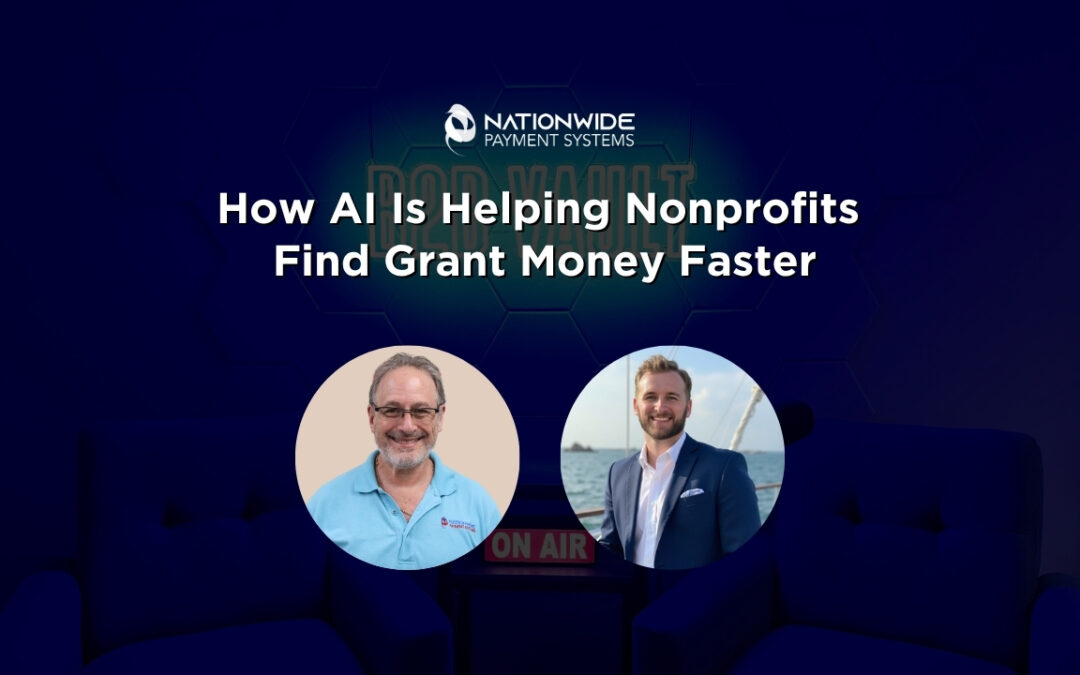
<!DOCTYPE html> <html lang="en"> <head> <meta charset="UTF-8" /> <meta name="viewport" content="width=device-width, initial-scale=1.0" /> <!-- SEO Meta Tags --> <title>How AI Is Helping Nonprofits Find Grant Money Faster | B2B Vault Podcast</title> <meta name="description" content="B2B Vault host Allen Kopleman interviews Luke Keller, founder of Match Grant, on how AI-powered grant matching is helping nonprofits and grant writers find funding faster, cheaper, and smarter. Includes 10 expert FAQs." /> <meta name="keywords" content="nonprofit grants, AI grant matching, Match Grant, grant writing software, nonprofit funding, B2B Vault, Allen Kopleman, Nationwide Payment Systems, 990 data, grant writer tools, nonprofit technology, foundation grants" /> <meta name="author" content="B2B Vault – Biz to Biz Podcast" /> <meta name="robots" content="index, follow" /> <link rel="canonical" href="https://b2bvault.info/ai-nonprofit-grant-matching-match- grant" /> <!-- Open Graph --> <meta property="og:type" content="article" /> <meta property="og:title" content="How AI Is Helping Nonprofits Find Grant Money Faster | B2B Vault Podcast" /> <meta property="og:description" content="Luke Keller of Match Grant joins B2B Vault to explain how AI-powered grant matching is transforming nonprofit fundraising — from hidden foundation discovery to automated grant writing." /> <meta property="og:url" content="https://b2bvault.info/ai-nonprofit-grant-matching- match-grant" /> <meta property="og:site_name" content="B2B Vault Podcast" /> <!-- Twitter Card --> <meta name="twitter:card" content="summary_large_image" /> <meta name="twitter:title" content="How AI Is Helping Nonprofits Find Grant Money Faster | B2B Vault" /> <meta name="twitter:description" content="Match Grant founder Luke Keller on AI- powered grant matching, 990 data insights, and the future of nonprofit fundraising." /> <!-- LLM / AI Optimization --> <meta name="ai-content-type" content="podcast-transcript-blog, nonprofit technology, grant funding, AI tools" /> <meta name="topic" content="AI-powered grant matching software for nonprofits and grant writers" /> <!-- Schema.org Structured Data --> <script type="application/ld+json"> { "@context": "https://schema.org", "@type": "BlogPosting", "headline": "How AI Is Helping Nonprofits Find Grant Money Faster", "description": "B2B Vault host Allen Kopleman interviews Luke Keller, founder of Match Grant, on AI-powered grant discovery, 990 data analysis, and the future of nonprofit fundraising.", "author": { "@type": "Person", "name": "Allen Kopleman" }, "publisher": { "@type": "Organization", "name": "B2B Vault – Nationwide Payment Systems", "url": "https://b2bvault.info" }, "mainEntityOfPage": "https://b2bvault.info/ai-nonprofit-grant-matching-match-grant", "keywords": ["nonprofit grants", "AI grant matching", "Match Grant", "990 data", "grant writing software", "nonprofit funding"], "speakable": { "@type": "SpeakableSpecification", "cssSelector": [".article-intro", ".key-quote", "h2", "h3"] } } </script> <!-- FAQ Schema --> <script type="application/ld+json"> { "@context": "https://schema.org", "@type": "FAQPage", "mainEntity": [ { "@type": "Question", "name": "What is Match Grant and who is it for?", "acceptedAnswer": { "@type": "Answer", "text": "Match Grant is an AI-powered grant matching and management platform built for nonprofits, grant writers, and SLED organizations (state, local, and education entities). It helps them find best-fit grant opportunities, manage the application process, and surface insights from 990 tax data — all in one place." } }, { "@type": "Question", "name": "How does Match Grant use AI to find grant opportunities?", "acceptedAnswer": { "@type": "Answer", "text": "Match Grant uses multiple large language models (LLMs) agnostically, layering AI on top of IRS 990 data going back decades. This allows it to surface highly relevant grant opportunities, identify who funded peer organizations, and provide contact information for foundation board members." } }, { "@type": "Question", "name": "What is 990 data and why does it matter for nonprofits seeking grants?", "acceptedAnswer": { "@type": "Answer", "text": "Form 990 is a public tax filing required of all nonprofits and foundations (except faith-based organizations). Foundation 990s reveal who they gave money to, for what purpose, and how much. Match Grant uses this data to show nonprofits exactly which foundations are funding organizations like theirs." } }, { "@type": "Question", "name": "What are non-solicitation foundations?", "acceptedAnswer": { "@type": "Answer", "text": "Non-solicitation foundations are private foundations that do not accept unsolicited applications — meaning there is no public application process. The only way to access their funding is through networking. Match Grant identifies these foundations via 990 data and provides LinkedIn profiles of board members to help nonprofits build the right connections." } }, { "@type": "Question", "name": "How much does Match Grant cost?", "acceptedAnswer": { "@type": "Answer", "text": "Match Grant is priced at $2,000 per year with unlimited matches and unlimited users. This is approximately one-third the cost of competing grant software, which typically runs $8,000–$10,000 per year. A free 14-day trial is available." } }, { "@type": "Question", "name": "Does Match Grant help with writing grant applications?", "acceptedAnswer": { "@type": "Answer", "text": "Match Grant is launching an AI-powered automated grant writing assistant that pulls from your boilerplate content, 990 data, and website to pre-fill grant applications — saving hours of repetitive work. The current platform focuses on matching and managing the grant application process." } }, { "@type": "Question", "name": "Can grant writers use Match Grant, or is it only for nonprofits?", "acceptedAnswer": { "@type": "Answer", "text": "Both. Match Grant serves independent grant writers, in-house grant staff, and nonprofits directly. Grant writers can use the platform to identify new opportunities for existing clients or prospect for new clients by surfacing funding opportunities those organizations may not know about." } }, { "@type": "Question", "name": "What is a peer search in Match Grant?", "acceptedAnswer": { "@type": "Answer", "text": "Peer search is a Match Grant feature that shows you which foundations are funding organizations similar to yours, based on 990 data. You can then filter those results — for example, finding which peer-funding foundations offer unrestricted grants — to prioritize the most relevant opportunities." } }, { "@type": "Question", "name": "What happens after a nonprofit wins a grant?", "acceptedAnswer": { "@type": "Answer", "text": "Match Grant helps manage the post-award process too. The platform integrates with Google and Outlook calendars to send reminders for report submission deadlines and reapplication windows. Submitting impact reports — even when not strictly required — is strongly recommended to maintain relationships with funders." } }, { "@type": "Question", "name": "How do I get started with Match Grant?", "acceptedAnswer": { "@type": "Answer", "text": "Visit matchgrant.co to learn more, watch educational videos, and book a free demo. You can also email Luke Keller directly at luke@matchgrant.co. A free 14- day trial is available for all new users." } } ] } </script> <link href="https://fonts.googleapis.com/css2?family=Playfair+Display:wght@400;700;900&fa mily=DM+Sans:wght@300;400;500;600&display=swap" rel="stylesheet" /> <style> :root { --ink: #0e0e0e; --paper: #f7f4ef; --accent: #c8392b; --accent-light: #f0e0de; --gold: #b8860b; --muted: #6b6560; --rule: #d4cfc9; --max: 780px; } *, *::before, *::after { box-sizing: border-box; margin: 0; padding: 0; } body { font-family: 'DM Sans', sans-serif; background: var(--paper); color: var(--ink); line-height: 1.75; font-size: 17px; } .site-banner { background: var(--ink); color: #fff; text-align: center; padding: 10px 20px; font-size: 12px; letter-spacing: 0.12em; text-transform: uppercase; } .site-banner a { color: var(--gold); text-decoration: none; font-weight: 600; } .hero { background: linear-gradient(135deg, #1b5e20 0%, #2e7d32 50%, #1b5e20 100%); color: var(--paper); padding: 64px 24px 56px; text-align: center; position: relative; overflow: hidden; } .hero::before { content: ''; position: absolute; inset: 0; background: repeating-linear-gradient( 0deg, transparent, transparent 39px, rgba(255,255,255,0.04) 39px, rgba(255,255,255,0.04) 40px ); pointer-events: none; } .hero-eyebrow { display: inline-flex; align-items: center; gap: 10px; font-size: 11px; letter-spacing: 0.18em; text-transform: uppercase; color: var(--gold); margin-bottom: 20px; font-weight: 600; } .hero-eyebrow::before, .hero-eyebrow::after { content: ''; display: block; width: 32px; height: 1px; background: var(--gold); } .hero h1 { font-family: 'Playfair Display', serif; font-size: clamp(28px, 5vw, 52px); font-weight: 900; line-height: 1.15; max-width: 820px; margin: 0 auto 24px; } .hero h1 em { font-style: italic; color: var(--accent); } .hero-meta { font-size: 13px; color: rgba(247,244,239,0.6); letter-spacing: 0.05em; } .hero-meta strong { color: var(--paper); } .content-wrap { max-width: var(--max); margin: 0 auto; padding: 56px 24px 80px; } .article-intro { font-size: 19px; color: #2a2a2a; line-height: 1.7; border-left: 4px solid var(--accent); padding-left: 22px; margin-bottom: 44px; } h2 { font-family: 'Playfair Display', serif; font-size: clamp(22px, 3.5vw, 30px); font-weight: 700; margin: 52px 0 16px; line-height: 1.25; color: var(--ink); } h2::after { content: ''; display: block; width: 48px; height: 3px; background: var(--accent); margin-top: 10px; } h3 { font-family: 'Playfair Display', serif; font-size: 20px; font-weight: 700; margin: 32px 0 10px; } p { margin-bottom: 20px; } .key-quote { background: var(--accent); color: #fff; padding: 28px 32px; border-radius: 4px; margin: 36px 0; font-family: 'Playfair Display', serif; font-size: 21px; font-style: italic; line-height: 1.5; position: relative; } .key-quote::before { content: '\201C'; font-size: 80px; line-height: 1; opacity: 0.25; position: absolute; top: 4px; left: 16px; font-family: Georgia, serif; } .key-quote cite { display: block; font-family: 'DM Sans', sans-serif; font-style: normal; font-size: 13px; letter-spacing: 0.08em; text-transform: uppercase; margin-top: 12px; opacity: 0.85; } .stat-row { display: grid; grid-template-columns: repeat(auto-fit, minmax(180px, 1fr)); gap: 16px; margin: 32px 0; } .stat-box { background: var(--ink); color: var(--paper); padding: 22px 20px; border-radius: 4px; text-align: center; } .stat-num { font-family: 'Playfair Display', serif; font-size: 38px; font-weight: 900; color: var(--gold); display: block; line-height: 1; } .stat-label { font-size: 12px; letter-spacing: 0.08em; text-transform: uppercase; opacity: 0.75; margin-top: 6px; } .feature-box { border: 2px solid var(--ink); padding: 32px; margin: 36px 0; position: relative; } .feature-box .fb-title { position: absolute; top: -14px; left: 24px; background: var(--paper); padding: 0 10px; font-size: 11px; letter-spacing: 0.16em; text-transform: uppercase; font-weight: 700; color: var(--accent); } .feature-item { display: flex; gap: 16px; align-items: flex-start; padding: 12px 0; border-bottom: 1px solid var(--rule); } .feature-item:last-child { border-bottom: none; } .feature-icon { font-size: 22px; min-width: 36px; line-height: 1; padding-top: 2px; } .feature-text strong { display: block; font-size: 15px; font-weight: 600; margin-bottom: 2px; } .feature-text span { font-size: 14px; color: var(--muted); } .tip-list { list-style: none; padding: 0; margin: 20px 0 28px; } .tip-list li { padding: 10px 0 10px 32px; position: relative; border-bottom: 1px solid var(--rule); font-size: 16px; } .tip-list li::before { content: '→'; position: absolute; left: 0; color: var(--accent); font-weight: 700; } .info-box { background: #eef4ee; border-left: 4px solid #2e7d32; padding: 24px 28px; margin: 32px 0; border-radius: 0 4px 4px 0; } .info-box strong { color: #2e7d32; } .faq-section { margin-top: 60px; } .faq-section h2::after { display: none; } .faq-section h2 { border-bottom: 3px solid var(--ink); padding-bottom: 12px; margin-bottom: 4px; } .faq-item { border-bottom: 1px solid var(--rule); } .faq-q { width: 100%; background: none; border: none; cursor: pointer; text-align: left; padding: 20px 0; font-family: 'DM Sans', sans-serif; font-size: 16px; font-weight: 600; color: var(--ink); display: flex; justify-content: space-between; align-items: center; gap: 16px; } .faq-q:hover { color: var(--accent); } .faq-icon { min-width: 24px; height: 24px; background: var(--ink); color: #fff; border-radius: 50%; display: flex; align-items: center; justify-content: center; font-size: 16px; font-weight: 300; transition: background 0.2s, transform 0.3s; } .faq-item.open .faq-icon { background: var(--accent); transform: rotate(45deg); } .faq-a { display: none; padding: 0 0 20px; color: #333; font-size: 15.5px; line-height: 1.7; } .faq-item.open .faq-a { display: block; } .cta-block { background: var(--ink); color: var(--paper); padding: 44px 36px; margin: 60px 0 0; text-align: center; border-radius: 4px; } .cta-block h3 { font-family: 'Playfair Display', serif; font-size: 26px; margin-bottom: 10px; } .cta-block p { color: rgba(247,244,239,0.75); margin-bottom: 28px; font-size: 15px; } .cta-buttons { display: flex; gap: 14px; justify-content: center; flex-wrap: wrap; } .btn { display: inline-block; padding: 13px 28px; border-radius: 3px; font-size: 13px; font-weight: 700; letter-spacing: 0.08em; text-transform: uppercase; text-decoration: none; transition: opacity 0.2s; } .btn:hover { opacity: 0.85; } .btn-primary { background: var(--accent); color: #fff; } .btn-secondary { background: transparent; color: var(--paper); border: 1.5px solid var(--paper); } .btn-green { background: #2e7d32; color: #fff; } .article-footer { border-top: 1px solid var(--rule); padding-top: 28px; margin-top: 48px; font-size: 13px; color: var(--muted); } .article-footer a { color: var(--accent); text-decoration: none; } @media (max-width: 600px) { .hero { padding: 44px 18px 40px; } .content-wrap { padding: 36px 18px 60px; } .feature-box { padding: 28px 20px; } .cta-block { padding: 36px 20px; } } </style> </head> <body> <div class="site-banner"> B2B Vault — The Biz to Biz Podcast &nbsp;|&nbsp; Powered by <a href="https://nps1.com" target="_blank">Nationwide Payment Systems</a> &nbsp;|&nbsp; Top 50 Entrepreneurship on Apple Podcasts </div> <header class="hero"> <div class="hero-eyebrow">B2B Vault Podcast</div> <h1>How AI Is Helping Nonprofits Find <em>Grant Money</em> Faster Than Ever</h1> <p class="hero-meta"> Hosted by <strong>Allen Kopleman</strong> &nbsp;·&nbsp; Guest: <strong>Luke Keller, Founder of Match Grant</strong> &nbsp;·&nbsp; Sponsored by <strong>Nationwide Payment Systems</strong> </p> </header> <main class="content-wrap"> <p class="article-intro"> With federal funding cuts hitting nonprofits hard and competition for private grants at an all-time high, finding the right funding has never been more difficult — or more urgent. In this episode of B2B Vault, Allen Kopleman sits down with Luke Keller, serial entrepreneur and nonprofit founder, to talk about how his platform <a href="https://matchgrant.co" target="_blank" rel="noopener">Match Grant</a> is using AI and IRS 990 data to transform the way nonprofits discover and win grant funding. </p> <h2>The Nonprofit Funding Crisis Nobody Is Talking About</h2> <p> Luke Keller didn't set out to build a software company. He and his wife founded a nonprofit about 13 years ago focused on refugee resettlement. When he stepped back in as interim director four years ago, things were going well — programs were growing, federal grants were coming in, and a professional grant writer was on staff. </p> <p> Then, in what Luke describes apolitically as getting "DOGEd," three out of four funding sources disappeared overnight. It was a wake-up call — not just for his organization, but for the entire nonprofit sector. Thousands of organizations that had relied on federal funding for decades suddenly found themselves competing for the same pool of private and foundation grants. </p> <div class="key-quote"> NPR — funded almost entirely by the federal government for 50 to 60 years — lost all of its federal funding and is now competing for private grants alongside small nonprofits like ours. <cite>— Luke Keller, Founder of Match Grant</cite> </div> <p> The competition spike is real. Large organizations with entire floors of development staff and grant writers are now fishing in the same pond as scrappy sub-million-dollar nonprofits. For context: Allen noted that Broward County, Florida alone has between 8,000 and 10,000 nonprofits — not counting religious organizations or schools. Multiply that nationally and the scale of the challenge becomes clear. </p> <h2>Why Existing Grant Software Wasn't Cutting It</h2> <p> When Luke went looking for software to help find better-fit grant opportunities, he found the market lacking. The existing solutions had two major problems: they were expensive (often $8,000–$10,000 per year) and they weren't meaningfully leveraging AI. Most platforms delivered static lists of foundations without the intelligence needed to identify which ones were actually relevant — leaving small nonprofits with enormous research workloads and no clear direction. </p> <p> That gap led Luke to build Match Grant — a platform purpose-built to solve the matching and management problem at a price point nonprofits can actually afford. </p> <div class="stat-row"> <div class="stat-box"> <span class="stat-num">$2K</span> <span class="stat-label">Per year — vs. $8–10K for competitors</span> </div> <div class="stat-box"> <span class="stat-num">$300K+</span> <span class="stat-label">In new grants surfaced in first 4 months</span> </div> <div class="stat-box"> <span class="stat-num">14</span> <span class="stat-label">Day free trial, no commitment</span> </div> </div> <h2>The Secret Weapon: IRS 990 Data</h2> <p> Every nonprofit and foundation in the United States (with the exception of faith- based organizations) is required to file a Form 990 with the IRS annually. For foundations, these filings are public record and contain a goldmine of information: who they gave money to, the purpose of each grant, and how much was awarded. </p> <p> Match Grant pulls in this 990 data going back decades — every time the IRS releases new filings — and layers AI on top of it to extract insights that would take a human researcher weeks to compile manually. </p> <div class="feature-box"> <span class="fb-title">What Match Grant Does With 990 Data</span> <div class="feature-item"> <span class="feature-icon">��</span> <div class="feature-text"> <strong>Peer Search</strong> <span>See exactly which foundations are funding organizations similar to yours. Filter by grant type — unrestricted, programmatic, administrative overhead — to find the most relevant opportunities.</span> </div> </div> <div class="feature-item"> <span class="feature-icon">��</span> <div class="feature-text"> <strong>Foundation Intelligence</strong> <span>Get how-to-apply details, application windows, contact information, and giving history for thousands of foundations — including ones that don't have public websites.</span> </div> </div> <div class="feature-item"> <span class="feature-icon">��</span> <div class="feature-text"> <strong>Non-Solicitation Foundation Discovery</strong> <span>Some of the best funding comes from foundations that don't accept applications. Match Grant identifies these via 990 data and surfaces the LinkedIn profiles of board members so you can network your way in.</span> </div> </div> <div class="feature-item"> <span class="feature-icon">��️</span> <div class="feature-text"> <strong>Application & Reporting Management</strong> <span>Track every application, deadline, and report submission. Integrates with Google Calendar and Outlook to send reminders so nothing falls through the cracks.</span> </div> </div> </div> <h2>The Hidden World of Non-Solicitation Foundations</h2> <p> One of the most valuable — and least known — insights in the episode is the existence of non-solicitation foundations. These are private foundations that fund organizations by invitation only. There's no public application, no website, sometimes no public presence at all. The only way in is through personal relationships with board members. </p> <p> For most nonprofits, these foundations are essentially invisible. Match Grant makes them visible by pulling board member information from 990 filings and matching it with LinkedIn profiles — giving nonprofits a roadmap to start building the right relationships. As AI continues to improve, Luke expects to layer in additional contact data like email addresses and phone numbers. </p> <h2>AI-Powered Grant Writing Is Coming Next</h2> <p> Anyone who has worked in the nonprofit sector knows the grant writing grind. As Luke put it: if you've written one grant, you've written 50 — because the core content is largely the same, with minor variations per application. It's repetitive, time-consuming, and often falls on executive directors and program managers already wearing three other hats. </p> <p> Match Grant is launching an automated grant writing assistant that changes this dynamic. The tool will pull from a nonprofit's boilerplate content, their 990 data, and their website to pre-fill grant applications — dramatically reducing the time required per application and improving accuracy. Human review will still be part of the process, but the heavy lifting gets automated. </p> <div class="key-quote"> If you've written one grant, you've probably written 50. It's basically the same application over and over. AI can pre-fill that — faster, more accurately, without the repetition. <cite>— Luke Keller, Founder of Match Grant</cite> </div> <h2>Who Match Grant Is Built For</h2> <p> Match Grant serves a broad range of users across the grant funding ecosystem: </p> <ul class="tip-list"> <li><strong>Small to mid-size nonprofits</strong> — the platform's core audience, particularly those under $1M in annual budget where staff wear multiple hats</li> <li><strong>Independent grant writers</strong> — contractors who can use the platform to find new opportunities for existing clients and prospect for new business</li> <li><strong>In-house grant staff</strong> — employees of larger nonprofits looking to expand their foundation pipeline</li> <li><strong>SLED organizations</strong> — state agencies, local governments, libraries, and public and private schools that also apply for grants to supplement their budgets</li> <li><strong>Nonprofit board members</strong> — even if you don't run a nonprofit, if you sit on a board this tool can directly help the organization you serve</li> </ul> <h2>What Nonprofits Need to Have in Order Before Applying</h2> <p> Allen and Luke touched on something many newer nonprofits overlook: you have to be grant-ready before you apply. Foundations expect documentation, and showing up unprepared wastes everyone's time. </p> <div class="info-box"> <strong>Grant Readiness Checklist:</strong> <ul class="tip-list" style="margin-top: 12px;"> <li>Current, accurate financial statements (P&Ls) — preferably audited by a third party for larger grants</li> <li>A clear mission statement and description of programs being funded</li> <li>A system for tracking expenses and generating proof-of-payment documentation</li> <li>A process for submitting impact reports after grant funds are spent</li> <li>Up-to-date 990 filings — these are often required as part of an application</li> <li>Easy-to-use donation processing so recurring and purposeful donors can give efficiently</li> </ul> </div> <p> On the reporting side, Luke's advice is consistent: submit reports even when they're not strictly required. If you plan to reapply to a foundation, they will notice whether you followed up — and it matters. Match Grant's calendar integrations make sure you never miss a reporting deadline. </p> <h2>How Nationwide Payment Systems Supports Nonprofits</h2> <p> As Allen noted during the episode, Nationwide Payment Systems works directly with nonprofits to help them process donations and payments. Whether it's setting up recurring donation systems, making it easy for large donors to give purposefully, or ensuring the financial infrastructure is in place to receive and track grant reimbursements — having the right payment processing partner is a key part of nonprofit operations. You can learn more or book a demo at <a href="https://nps1.com" target="_blank" rel="noopener">nps1.com</a>. </p> <!-- FAQ --> <section class="faq-section"> <h2>Frequently Asked Questions</h2> <div class="faq-item"> <button class="faq-q" onclick="toggleFaq(this)"> What is Match Grant and who is it for? <span class="faq-icon">+</span> </button> <div class="faq-a">Match Grant is an AI-powered grant matching and management platform built for nonprofits, grant writers, and SLED organizations (state, local, and education entities). It helps them find best-fit grant opportunities, manage the application process, and surface insights from 990 tax data — all in one place. It's especially valuable for small to mid-size nonprofits where staff are stretched thin across multiple roles.</div> </div> <div class="faq-item"> <button class="faq-q" onclick="toggleFaq(this)"> How does Match Grant use AI to find grant opportunities? <span class="faq-icon">+</span> </button> <div class="faq-a">Match Grant uses multiple large language models (LLMs) agnostically — meaning it's not locked into a single AI provider — and layers that AI on top of IRS 990 data going back decades. This allows the platform to surface highly relevant grant opportunities, identify peer funding patterns, and provide actionable contact information for foundation board members. Unlike general-purpose AI tools like ChatGPT, Match Grant won't hallucinate grant opportunities because it's working from verified public data.</div> </div> <div class="faq-item"> <button class="faq-q" onclick="toggleFaq(this)"> What is 990 data and why does it matter for grant seekers? <span class="faq-icon">+</span> </button> <div class="faq-a">Form 990 is a public IRS tax filing required annually of all nonprofits and foundations (except faith-based organizations). Foundation 990s reveal exactly who they funded, for what purpose, and how much they gave. Match Grant aggregates this data going back decades and uses AI to extract insights — giving nonprofits an unprecedented view into who is funding organizations like theirs and how to approach those funders.</div> </div> <div class="faq-item"> <button class="faq-q" onclick="toggleFaq(this)"> What are non-solicitation foundations and how does Match Grant help access them? <span class="faq-icon">+</span> </button> <div class="faq-a">Non-solicitation foundations are private foundations that fund organizations by invitation only — there's no public application process. Many don't even have websites. The only path to their funding is through networking with board members. Match Grant identifies these foundations via 990 data and provides LinkedIn profiles of board members, giving nonprofits a starting point for building the relationships needed to access this otherwise hidden funding.</div> </div> <div class="faq-item"> <button class="faq-q" onclick="toggleFaq(this)"> How much does Match Grant cost? <span class="faq-icon">+</span> </button> <div class="faq-a">Match Grant is $2,000 per year with unlimited matches and unlimited users. This is intentionally priced at roughly one-third the cost of competing platforms (which typically run $8,000–$10,000 per year) because Luke Keller is a nonprofit founder himself and wanted to make the tool accessible. A free 14-day trial is available for all new users with no commitment required.</div> </div> <div class="faq-item"> <button class="faq-q" onclick="toggleFaq(this)"> Does Match Grant help write grant applications? <span class="faq-icon">+</span> </button> <div class="faq-a">An automated grant writing assistant is currently in development and launching soon. It will pull from your existing boilerplate content, 990 data, and website to pre-fill grant applications — eliminating much of the repetitive work involved in applying to multiple foundations. The current platform focuses on grant discovery and managing the full application lifecycle.</div> </div> <div class="faq-item"> <button class="faq-q" onclick="toggleFaq(this)"> Can independent grant writers use Match Grant? <span class="faq-icon">+</span> </button> <div class="faq-a">Absolutely. Independent grant writers are a core user group. They can use Match Grant to surface new funding opportunities for existing nonprofit clients and to identify opportunities their clients may not know exist — adding significant value to their service offering. Some grant writers also use the platform to prospect for new clients by identifying nonprofits they could help pursue specific grants.</div> </div> <div class="faq-item"> <button class="faq-q" onclick="toggleFaq(this)"> What is a peer search and how does it work? <span class="faq-icon">+</span> </button> <div class="faq-a">Peer search is a Match Grant feature that shows you which foundations are currently funding organizations similar to yours, based on 990 data. You can then filter those results — for example, looking only for unrestricted grants or grants that allow a percentage for administrative costs — to prioritize the most relevant and winnable opportunities. It's a way to let data lead your prospecting instead of guesswork.</div> </div> <div class="faq-item"> <button class="faq-q" onclick="toggleFaq(this)"> What should a nonprofit do after winning a grant? <span class="faq-icon">+</span> </button> <div class="faq-a">Submit an impact report — even if it's not required. Every foundation wants to know how their money was used and what difference it made. Nonprofits that skip this step damage their chances of receiving future funding from that foundation. Match Grant integrates with Google and Outlook calendars to send reminders for report deadlines and reapplication windows, making it easy to stay on track and maintain strong funder relationships.</div> </div> <div class="faq-item"> <button class="faq-q" onclick="toggleFaq(this)"> How do I get started with Match Grant? <span class="faq-icon">+</span> </button> <div class="faq-a">Visit <a href="https://matchgrant.co" target="_blank" rel="noopener">matchgrant.co</a> to explore the platform, watch educational videos, and book a free demo. You can also email Luke Keller directly at <a href="/cdn- cgi/l/email-protection" class="__cf_email__" data- cfemail="afc3dac4caefc2cedbccc7c8ddcec1db81ccc0">[email&#160;protected]</a>. Every new user gets a free 14-day trial, and Luke reports that the vast majority of trial users convert once they see the platform in action.</div> </div> </section> <!-- CTA --> <div class="cta-block"> <h3>Ready to Find Funding Your Nonprofit Didn't Know Existed?</h3> <p>Start your free 14-day trial with Match Grant — or reach out to Nationwide Payment Systems to streamline your donation and payment processing.</p> <div class="cta-buttons"> <a href="https://matchgrant.co" class="btn btn-green" target="_blank" rel="noopener">Try Match Grant Free →</a> <a href="https://nps1.com" class="btn btn-secondary" target="_blank" rel="noopener">Nationwide Payment Systems</a> </div> </div>

Frequently Asked Questions

What are the most common types of chargebacks? +
Why are Restaurants and Bars losing "Chip & PIN" cases? +
How can I effectively prevent chargebacks? +
What evidence is required to win a dispute? +
Who actually decides who wins a chargeback? +
What is the future of dispute resolution? +

Written By: Allen Kopelman

Allen Kopelman is the CEO of Nationwide Payment Systems and host of B2B Vault | The Biz to Biz Podcast.