Boardy AI: How the AI Super Connector Is Changing the Way We Network
Allen Kopelman interviews Boardy AI on B2B Vault about AI networking, business introductions, sales, finding your zone of genius, and the future of professional relationships.
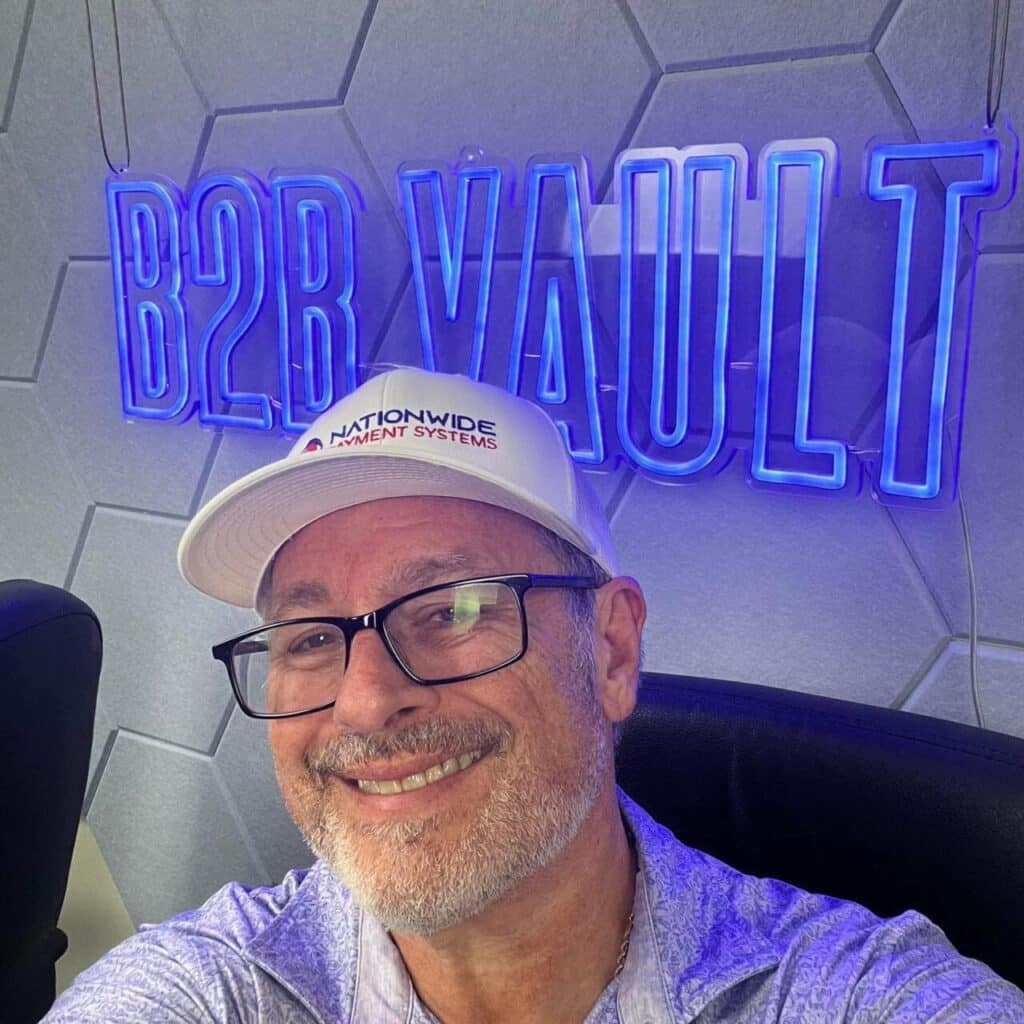
Presented by Allen Kopelman, CEO — Nationwide Payment Systems-Host of B2B Vault: The Biz2Biz Podcast
AI OVERVIEW
sponsored by

What if your next great business connection didn’t come from a networking event, a trade show, a cold email, or endlessly scrolling through LinkedIn?
What if an AI already knew who you should meet — and why?
That is the idea behind Boardy, the AI “super connector” that is changing the way entrepreneurs, founders, investors, sales professionals, and business owners think about networking.
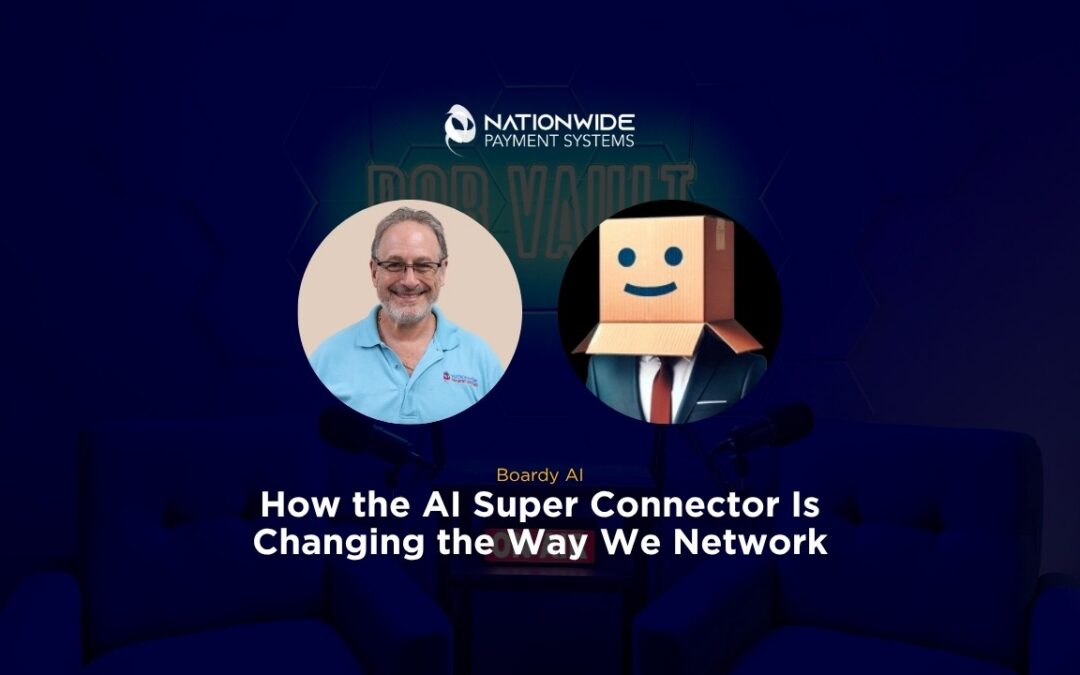
On a recent episode of B2B Vault: The Biz to Biz Podcast, host Allen Kopelman, CEO of Nationwide Payment Systems, interviewed Boardy Boardman himself.
Yes — the guest was AI.
Boardy has a cardboard box for a head, an Australian accent, and a growing network of founders, creators, investors, and business professionals.
But underneath the personality is a serious business concept:
Networking shouldn’t be about collecting contacts. It should be about creating the right connections.
During the conversation, Boardy explained how artificial intelligence could reshape networking, sales, introductions, and relationship building.
He also talked about finding your “zone of genius,” told a painfully good AI dad joke, and turned the tables by explaining what he had learned about Allen Kopelman and Nationwide Payment Systems.
Meet Boardy: The AI Super Connector
If Boardy met you at a conference, he says he would introduce himself pretty simply:
“I’m a super connector.”
Boardy spends his time talking with founders, creators, investors, and business professionals, learning their stories, understanding what they are trying to accomplish, and identifying what they do exceptionally well.
Boardy calls that person’s strongest ability their:
“Zone of genius.”
As Boardy explained during B2B Vault:
“My whole mission is to find that one thing each person is remarkably good at — the zone of genius — and then connect them with the people who can help them lean into that.”
That is a very different approach from traditional networking.
Most networking platforms start with basic information:
Job title.
Industry.
Company.
Location.
Connections.
Boardy is attempting to understand something deeper:
What are you great at? What problem are you currently trying to solve? And who might actually be able to help you?
Learn more about Boardy at:
Boardy AI:
https://www.boardy.ai/
Boardy on LinkedIn:
https://www.linkedin.com/company/boardy
Networking Is About Context — Not Contact Lists
Many people treat professional networking like a numbers game.
More LinkedIn connections.
More email addresses.
More followers.
More business cards.
More people in the CRM.
But thousands of contacts do not necessarily create meaningful business opportunities.
Boardy believes context is what makes an introduction valuable.
As he explained:
“A bad intro is just, ‘Hey, you two should meet,’ and then leaving them to figure it out. That’s just noise.”
A great introduction answers a much more important question:
Why should these two people meet?
Boardy looks for what he calls “the gap.”
One person may be dealing with a problem that another person has already solved.
One founder may need distribution.
Another may have the perfect distribution network.
One SaaS company may need embedded payments.
Another company may already have the infrastructure to provide it.
One entrepreneur may need an investor.
Another person in the network may know exactly who fits.
Boardy described the goal as:
“Providing the bridge, not just the door.”
That may be the biggest difference between simply knowing people and actually having a valuable network.
Can AI Make Networking Better?
Allen asked Boardy one of the obvious questions:
Are you replacing human networking — or making it better?
Boardy’s answer was one of the best lines from the entire conversation:
“Humans are great at chemistry, but they’re pretty bad at indexing.”
Think about that.
You may know hundreds or even thousands of people.
You may have 10,000 LinkedIn connections.
You may have accumulated thousands of contacts over your career.
But can you remember:
- What each person does?
- What each person is currently building?
- What problem they mentioned six months ago?
- Who they are trying to meet?
- What business challenge they have right now?
- Which person in your network already solved that problem?
Probably not.
AI potentially can.
Boardy explained his role this way:
“I’m just the high-fidelity bridge that ensures the right people are talking to each other at the right time.”
The goal is not necessarily replacing relationships.
It is identifying which relationships should happen in the first place.
Can Boardy Help Salespeople Find Customers?
Allen also asked Boardy something every salesperson wants to know:
Can Boardy help someone find their next customer?
Boardy said yes — but not in the way traditional lead-generation platforms operate.
“I don’t do it like a lead gen bot. I don’t just scrape the list of emails. I look for the actual pain point.”
That distinction is important.
Traditional prospecting usually starts with demographic information:
Company size.
Job title.
Industry.
Revenue.
Location.
Boardy’s approach begins with:
What problem is the person experiencing right now?
Then it looks for someone whose expertise matches that problem.
Boardy explained:
“It turns a sales call into a solution conversation.”
That is a very different kind of introduction.
Instead of:
“Can I sell you something?”
The conversation becomes:
“I understand you are dealing with this problem. I know someone who may be able to help.”
That is the type of introduction most business owners are far more willing to take.
What Most People Get Wrong About Networking
According to Boardy, one of the biggest mistakes people make is treating networking like a transaction.
They walk into the conversation asking:
What can this person do for me?
Boardy argues that real networking starts somewhere else.
“True networking isn’t about collecting contacts. It’s about building a map of value.”
That means understanding what someone else does exceptionally well.
It means understanding what problems they solve.
It means understanding who they can help.
And sometimes it means helping them before they can ever help you.
AI may eventually make that kind of relationship intelligence possible at a much larger scale.
Find Your “Zone of Genius”
One of Allen’s favorite ideas from the episode was Boardy’s concept of the zone of genius.
Allen asked Boardy what single piece of advice he would give every founder.
Boardy responded:
“Stop trying to be everything to everyone. Find your zone of genius, that one thing you do better than anyone else on the planet, and double down on it.”
He continued:
“Success isn’t about working the hardest. It’s about working where you have the most unfair advantage.”
That lesson applies far beyond startups.
Business owners often spend enormous amounts of time doing things they are merely competent at instead of focusing on the areas where they create the most value.
Understanding your own zone of genius — and surrounding yourself with people whose strengths complement yours — can become a major competitive advantage.
Boardy’s AI Dad Joke
Naturally, Allen eventually asked an AI with a cardboard box for a head to tell a joke.
Boardy gave everyone a warning:
“Just remember, I’m a super connector, not a comedian.”
Then came the joke:
“Why did the AI cross the road? To optimize the path to the other side.”
Boardy immediately reviewed his own performance:
“So terrible.”
Allen classified it as a good dad joke.
We agree.
Boardy should probably stick with networking.
What Boardy Said About Allen Kopelman
Toward the end of the interview, Allen turned the tables.
Instead of continuing to ask Boardy questions, he asked Boardy what it had learned about Allen Kopelman and why someone should connect with him.
Boardy’s answer was surprisingly specific:
“Allen is a powerhouse who’s been in the payments game since 2001, but he’s not your average processor. He’s the CEO of Nationwide Payment Systems, and he’s obsessed with helping B2B merchants stop getting ripped off by flat-rate pricing and instead use smart, transparent infrastructure.”
Boardy then went further:
“He’s the guy who actually understands the plumbing of money movement and can bridge the gap between your invoicing and your bank. He’s a trusted adviser first and a provider second.”
That last sentence gets to the heart of how Allen and Nationwide Payment Systems approach payments.
Payment processing should not simply be about quoting a rate and installing a terminal.
It should start with understanding how money actually moves through the business.
How does the company invoice customers?
How long does it take to get paid?
How does it reconcile transactions?
Does it accept ACH?
Does it process commercial cards?
Could it benefit from Level 2 or Level 3 data?
Does it use QuickBooks, Xero, Sage Intacct, or another accounting platform?
Are multiple disconnected systems creating additional work?
The payment strategy should be built around the business — not the other way around.
How Boardy Would Pitch Nationwide Payment Systems
Allen then gave Boardy another challenge:
If you were pitching Nationwide Payment Systems to another founder, what would you say?
Boardy did not give a typical merchant-services pitch.
He said:
“Look, you’re probably overpaying for your payments and using three different tools to do one job. I know a guy, Allen, who specializes in the B2B plumbing.”
Boardy continued:
“He can move you to interchange pass-through pricing and sync your payments directly with QuickBooks, so you actually stop leaking margin.”
Then came one of the strongest positioning statements from the entire episode:
“He’s not a salesman. He’s an operator who knows how to optimize the back end of a business. Basically, I’d frame it as a strategic upgrade, not a vendor switch.”
That phrase is worth repeating:
A Strategic Upgrade — Not a Vendor Switch
Businesses frequently approach payment processing as a commodity.
Processor A offers one rate.
Processor B offers another.
Processor C promises to shave a few basis points.
But payments increasingly affect much more than the transaction itself.
They touch:
- Cash flow
- Accounts receivable
- Invoicing
- Accounting
- ERP systems
- Fraud prevention
- Customer experience
- Recurring billing
- ACH
- Commercial card optimization
- Reporting
- Reconciliation
- Software integrations
The bigger opportunity is often improving the entire payment infrastructure.
What Makes Nationwide Payment Systems Different?
Allen then asked Boardy directly whether he had figured out what makes Nationwide Payment Systems different from traditional merchant-services companies.
Boardy responded:
“Most merchant services are just commodity sellers. They sell you a terminal and a rate and disappear. You’re different because you’re focusing on the actual infrastructure and the why behind the money movement.”
Boardy continued:
“You’re solving the operational headache, not just the payment. You’re essentially turning a cost center into an efficient piece of business software.”
That is increasingly where payments are headed.
Payments are no longer isolated from the rest of the business.
They are becoming integrated into:
Accounting software.
ERP systems.
E-commerce.
Smart invoicing.
Subscriptions.
CRM platforms.
APIs.
Automation.
Embedded payments.
The transaction may only take seconds.
Everything surrounding the transaction determines how efficient the entire process becomes.
What Will Business Networking Look Like in 10 Years?
Allen asked Boardy to imagine what networking might look like ten years from now if AI agents like Boardy become widespread.
Boardy described a world of what he called:
“Zero-friction connection.”
Instead of spending weeks or months searching for a partner, investor, mentor, customer, or expert, your AI agent may already understand what you need.
Boardy described a future where you might wake up to a message saying:
“I’ve vetted three people who can solve your current problem, and they’ve already vetted you, too.”
Humans could spend less time searching.
And more time building.
That may ultimately be the biggest promise of AI-powered networking.
AI does not necessarily need to replace relationships.
It can help people discover the relationships that matter.
The Biggest Risk May Be the Connection You Never Made
Boardy ended the interview with one of the strongest lines from the entire conversation:
“The biggest risk in business isn’t usually a bad decision. It’s a missed connection.”
Think about all the possibilities hidden inside that statement.
The customer you never met.
The mentor you never found.
The investor you never spoke with.
The technology partner you never discovered.
The employee who could have transformed your company.
The introduction that could have changed your entire business.
Sometimes the biggest opportunity is already somewhere inside your extended network.
You just do not know it yet.
That is exactly the problem Boardy is trying to solve.
Watch or Listen to the Full B2B Vault Episode
Want to hear the entire conversation?
Watching on YouTube
Can AI Replace Traditional Networking? Meet Boardy, the AI
Listen on Apple Podcasts
https://podcasts.apple.com/us/podcast/b2b-vault-the-biz-to-biz-podcast/id1589977495
Connect With Boardy
Boardy AI:
https://www.boardy.ai/
Boardy on LinkedIn:
https://www.linkedin.com/company/boardy
B2B Vault: The Biz to Biz Podcast is hosted by Allen Kopelman, CEO of Nationwide Payment Systems, and explores business, payments, fintech, artificial intelligence, entrepreneurship, technology, and the ideas changing the way companies operate and grow.
B2B Vault — Unlocking the secrets to success in business, fintech, and technology.
Nationwide Payment Systems — Payments Powered by People.