AI Overview
AS SEEN IN B2BVAULT: How Businesses Can Control Spend Virtual Cards
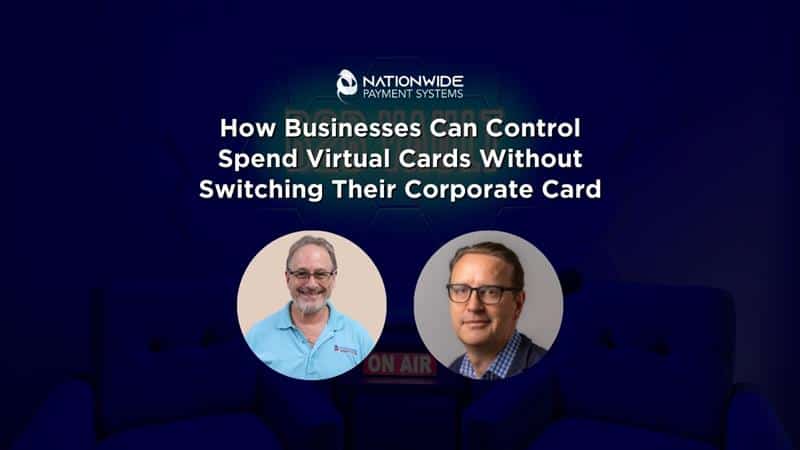
How Businesses Can Control Spend Virtual Cards Without Switching Their Corporate Card
Featuring Andrew Jamison of Extend on B2B Vault: The Biz to Biz Podcast, Hosted by Allen Kopelman.
Welcome back to B2B Vault: The Biz to Biz Podcast, sponsored by Nationwide Payment Systems and NPS1, our smart invoicing platform designed to help businesses get paid faster, automate collections, and improve cash flow.
In this episode, Allen Kopelman sits down with Andrew Jamison, a payments-and-software veteran and the founder behind Extend—a platform helping businesses manage B2B card spend in a smarter way without replacing the credit card they already use.
If you’ve ever had a corporate card compromised and then spent days updating subscriptions… or tried to reconcile “who spent what” across a messy stack of vendors, projects, and departments… this one hit home.
sponsored by

The Problem: Corporate Cards Weren’t Built for Modern B2B Spend
Businesses today don’t spend like they did 10 years ago.
Instead of a few big invoices and occasional purchases, most companies now deal with:
- hundreds of subscriptions
- recurring vendor charges
- employees in the field buying supplies.
- project-based spending (construction, logistics, advertising, healthcare staffing)
- vendor billing that needs clean reconciliation and fast month-end close
And the old method—sharing one physical card, or one card “managed” by one person—creates predictable chaos:
- charges that can’t be attributed to the right person
- fraud that forces a complete card replacement
- subscription sprawl (multiple teams paying for the same tools)
- manual data entry into the GL
- month-end close that eats weekends.
Andrew’s take was simple: most SMB and mid-market companies don’t have “resources” to implement complex systems.
So, Extend designed a solution that works with the card you already have.
What Extend Does (In Plain English)
Extend lets a business take an existing credit card—like an American Express card—and “shard” it into many virtual cards.
Each virtual card can have:
- its own spending limit
- a time window (only usable for a week, a month, a project duration, etc.)
- a dedicated vendor assignment
- a project ID
- a GL coding / expense category
- optional “rules” that reduce fraud risk and simplify reconciliation.
So instead of one corporate card used everywhere, you can have:
- one virtual card for AWS
- one virtual card for Slack
- one virtual card for Vendor A
- one virtual card for Project 17
- one virtual card for travel expenses
- one virtual card per franchise location or department
If one vendor gets compromised? You cancel one virtual card—not the entire corporate card.
That’s the “aha” moment.
Why This Matters: Fraud and Subscription Sprawl Are Taxing Every Business
Allen shared a real-life experience many business owners recognize:
One card gets hit with fraud → you replace the card → you scramble to update billing at every vendor → you miss a few → services shut off → your team gets disrupted.
Andrew shared an even bigger picture: some companies can have 250+ suppliers connected to card spending.
One compromised card shouldn’t mean updating billing in 250 places.
Virtual cards solve that—cleanly.
Extend Doesn’t Replace Banks — It Makes Banks More Competitive
A huge part of the conversation wasn’t just “virtual cards are cool.”
It was about the bigger shift happening in financial services:
- Banks have balance sheets and trust.
- Fintech’s have the UX and speed.
- Software companies are increasingly embedding payments.
Andrew emphasized Extend isn’t trying to become the bank or insert itself into financing.
Instead, Extend focuses on the “software experience” layer:
- mobile tools
- provisioning virtual cards instantly
- sending cards securely via email
- pushing virtual cards into digital wallets
- automation rules and controls
- better spending and expense management
That’s the part banks often struggle to build quickly.
And if they don’t solve it, customers drift to fintech alternatives.
The Growth of B2B Card Spend: Why This Isn’t a Trend — It’s a Migration
One of the most interesting moments was the scale comparison:
- US commercial card spend is around $1.8 trillion.
- broader B2B payments are measured in the tens of trillions.
Meaning: we’re still early in card adoption for B2B.
A major driver? The subscription economy.
Andrew shared a modern reality: even companies with traditional financial operations now have a huge percentage of expenses on card because of:
- cloud infrastructure (AWS)
- software tools (GitHub, Jira, Slack, etc.)
- recurring operational platforms
- digital services across departments
Cards make subscription management easier—if spend is controlled and reconciled properly.
The Real Win: Straight-Through Processing and Month-End Sanity
A key advantage of virtual cards is that the data is attached to card creation—not manually entered at checkout.
Historically, buyers were asked to type invoice numbers or project codes into a POS field:
- people didn’t know how.
- they mistyped it.
- reconciliation became messy anyway.
With virtual cards:
- the business assigns data once
- that data travels with the transaction
- finance teams don’t have to “clean it up” later.
This is what CFOs and finance leads want:
- fewer weekends closing books.
- fewer spreadsheets
- fewer errors
- better visibility without chasing the finance department for every question.
Where Extend Fits with Nationwide Payment Systems + NPS1?
This episode lined up with a theme we see every day at Nationwide Payment Systems:
Software is driving payment decisions.
Most businesses don’t wake up saying “I want a better payment processor.”
They wake up saying:
- “I need to get paid faster.”
- “I need to stop chasing invoices.”
- “I need clean reporting.”
- “I need automation.”
- “I need my financial ops to stop being a mess.”
That’s exactly why we built NPS1 for invoicing + payment links + automation on the receivables side—while platforms like Extend are cleaning up the payables/spend side.
It’s the same future: fewer manual steps, more control, cleaner data.
Industries Where Virtual Cards Shine
Andrew called out several use cases that are exploding right now:
- Construction (job-based costs, multiple sites, crews in the field)
- Healthcare staffing (travel nurses, credentialing costs, high volume of spending)
- Franchise groups (allocating cost correctly across locations)
- Logistics (rebilling, shipment-linked expenses)
- Digital advertising (campaign budgets and platform spend controls)
- Law firms (filing fees and client rebilling)
In every case, the theme is the same:
you can’t scale spend control with manual processes.
Where to Learn More About Extend
- Website: paywithextend.com
- Email: andrew@paywithextend.com
Listen to the Full Episode
Catch the deep dive on the B2B Vault Podcast:
Sponsored by Nationwide Payment Systems and NPS1 Smart Invoicing.
CLICK HERE TO FIND MORE ABOUT OUR PROGRAMS