Nationwide Payment Systems
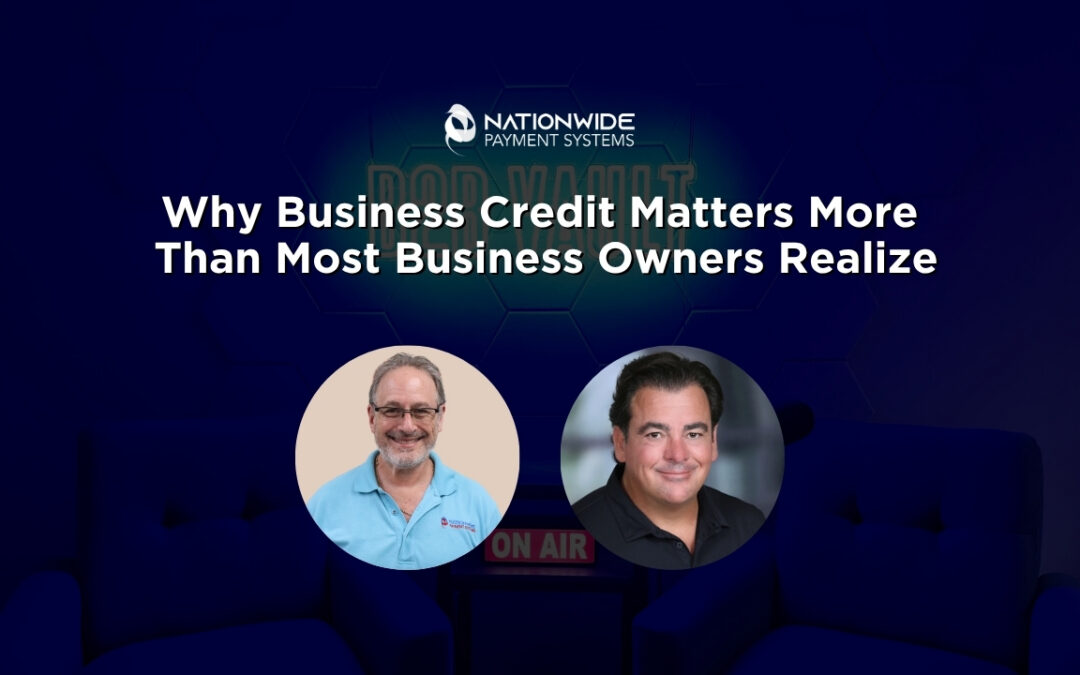
Why Business Credit Matters More Than Most Business Owners Realize
Allen Kopelman of B2B Vault interviews Levi King of Nav.com about business credit, trade credit, merchant cash advances, AI, fraud, and financing options for small business owners.
Presented by Allen Kopelman, CEO — Nationwide Payment Systems-Host of B2B Vault: The Biz2Biz Podcast
AI OVERVIEW
Artificial intelligence is moving past marketing copy and customer service chatbots; it is restructuring corporate finance. In this episode of the B2B Vault Podcast, host Allen Kopelman interviews Daniel Kalish, strategy expert at Nilus, to unpack how AI agents for treasury and finance are transforming complex cash management. Daniel highlights the "PayPal Paradox"—where seamless customer checkouts mask a chaotic web of backend bank accounts, multi-entity reconciliation, and currency exposures. By deploying autonomous AI agents with "human-in-the-loop" guardrails, mid-market businesses can automate daily cash positioning, forecast liquidity needs, and sweep idle balances into yield-bearing accounts—shifting the finance department from a traditional cost center into an active profit center.
B2B Vault Podcast Recap with Allen Kopelman and Levi King of Nav.com
Most business owners know they have a personal credit score.
But many do not realize their business may also have credit reports, business credit scores, trade payment history, vendor payment records, and financing data that lenders, vendors, credit card issuers, insurance companies, telecom providers, and other businesses may review.
That lack of awareness can cost a business real money.
On this episode of B2B Vault: The Biz to Biz Podcast, hosted by Allen Kopelman and powered by Nationwide Payment Systems, Allen sat down with Levi King, founder of Nav.com, to talk about business credit, how small business financing really works, why merchant cash advances can become dangerous, how fraud is increasing, and why AI is changing the way businesses operate.
The big lesson from the conversation was simple:
Business owners need to understand their credit before they need money.
Because when cash gets tight, when a big opportunity shows up, or when a business needs financing fast, the options available are often determined by what has already been built behind the scenes.
sponsored by

Who Is Levi King?
Levi King is a serial entrepreneur and the founder of Nav.com.
Before starting Nav, Levi built several Main Street businesses. His first company repaired electric signs. He eventually grew into manufacturing custom electric signs, doing installations, and servicing signs.
He later owned other businesses, including a hotel and franchises.
Through that experience, Levi saw how confusing business credit and financing could be for small business owners.
Consumers had tools like credit report websites and later services similar to Credit Karma. But business owners had very few simple tools to understand how lenders and third parties viewed their companies.
That experience eventually led him to co-found Lendio, a business financing marketplace, and then Nav, which helps small business owners understand and manage business credit.
Levi described Nav as something similar to Credit Karma for small business owners.
What Does Nav.com Do?
Nav helps business owners understand how third parties evaluate their business risk.
That may include:
Personal credit
Business credit
Business cash flow
Commercial credit reports
Financing eligibility
Business credit card options
Vendor payment history
Trade credit opportunities
Loan options
The goal is to help business owners see where they stand and what they may qualify for.
Nav also provides education, credit monitoring, financing recommendations, and tools to help business owners improve their financial profile over time.
According to Levi, one of the most important things Nav does is personalize the experience.
A plumber who has been in business for five years with poor credit needs different guidance than a bakery that has been open for one year with limited credit history.
Business credit is not one-size-fits-all.
Personal Credit Still Matters in Business
One of the first myths Levi addressed is the idea that once you build business credit, your personal credit no longer matters.
That is not true for most small businesses.
In many cases, lenders, business credit card issuers, and financing providers still review the owner’s personal credit.
Even when the financing is for the business, the owner’s credit may still be part of the decision.
That means business owners need to monitor both:
Their personal credit
Their business credit
If your personal credit is weak, it can limit your business financing options.
If your business credit is weak, it can also limit your ability to get better vendor terms, business credit cards, lines of credit, and other financial products.
The strongest position is having both in good shape.
Business Credit Does Not Work Like Personal Credit
Many business owners assume business credit works the same way as personal credit.
It does not.
That was one of the biggest points Levi made.
In personal credit, there is usually a high level of consistency between the major credit bureaus. If your credit looks good with one bureau, it is often similar with the others.
Business credit is different.
The commercial credit bureaus may have different data, different scoring models, different reporting relationships, and different information about your company.
That means a business owner cannot assume everything is fine just because one report looks okay.
Business credit can include many different types of data, including vendor payments, trade credit, business credit cards, loans, leases, tax liens, collections, and other commercial activity.
And sometimes a business owner may not even know something negative is reporting.
Trade Credit Is One of the Most Important Forms of Business Financing
A lot of business owners think financing only means loans or credit cards.
But Levi pointed out that trade credit is one of the most common forms of business financing.
Trade credit is when a vendor gives a business time to pay.
For example:
A contractor buys materials today and pays the supplier in 30 days.
A restaurant buys inventory and pays later.
A retailer receives products from a distributor on terms.
A service business gets supplies, equipment, or materials before cash comes in from the customer.
This is financing.
Even though it may not feel like a loan, it works like credit.
And that world is often powered by business credit.
If your business pays vendors late, those late payments may hurt your business credit.
If your business pays on time, it may help build a stronger commercial profile.
This is why payment discipline matters.
Why Vendor Terms Can Make or Break Cash Flow
For many businesses, vendor terms are essential.
Think about a contractor doing a $40,000 remodeling job.
The contractor may not be allowed to collect the full amount upfront. But materials, labor, and supplies still have to be paid for before the final customer payment comes in.
If that contractor has strong vendor relationships and net-30 or net-60 terms, the job becomes much easier to finance.
If not, the contractor may have to use credit cards, cash reserves, or expensive financing.
This is why business credit matters.
It can directly affect whether a business can operate smoothly, accept bigger jobs, and protect cash flow.
The Danger of Merchant Cash Advances
Allen and Levi also discussed one of the biggest traps small business owners fall into:
Merchant cash advances, often called MCAs.
An MCA is not always bad in every situation, but it can become extremely expensive and dangerous if a business owner does not understand the true cost.
Allen pointed out that some MCA products can carry very high effective costs. Some businesses take one advance, then stack another one on top of it, then another.
This can create a cycle where the business is constantly behind.
Levi compared it to consumer payday loans.
There may be cases where expensive financing makes sense, especially if the business has a short-term opportunity or emergency. But it should not become the normal way a business funds itself.
The better approach is to build strong personal credit, business credit, cash flow discipline, and banking relationships before you need money.
That way, when financing is needed, the business has better options.
Why Business Owners Fall for Financing Scams
Allen also brought up a growing problem:
Scammy financing videos and offers online.
You have probably seen them.
“We can get your business $100,000 in credit.”
“Get business funding with no revenue.”
“Get a huge line of credit fast.”
“Use this business credit hack.”
Many of these offers are misleading.
Levi explained that some companies may apply for multiple personal and business credit cards at once, charge the business owner thousands of dollars, and leave the owner with damaged credit from too many hard inquiries.
Others promise a “$100,000 line of credit,” but what they actually deliver may be a mix of small credit cards, vendor accounts, or trade credit lines that are not useful to that business.
For example, a business may be promised a major credit line but end up with captive vendor credit that can only be used at one supplier.
That may not help the business at all.
The lesson:
Do not pay someone thousands of dollars for a funding promise you do not fully understand.
Business owners should know what they are applying for, how it affects their credit, what fees are involved, and whether the financing actually helps their business.
Business Credit Can Affect More Than Loans
Another important takeaway from the episode is that business credit can affect more than just financing.
Business credit may influence:
Business credit card approvals
Vendor terms
Equipment leases
Telecom accounts
Insurance pricing
Business loans
Lines of credit
Supplier relationships
Personal guarantee requirements
Certain payment or processing decisions
If your business has no credit profile or a weak credit profile, more companies may require a personal guarantee.
That means the business owner personally backs the obligation.
As a business matures, strong business credit can help the company stand more on its own.
That is a major goal for many entrepreneurs.
Why Business Owners May Not Know They Were Denied Because of Business Credit
In consumer credit, if you apply for financing and get denied, you often receive an adverse action notice explaining that the decision was based on information from a credit bureau.
That process has helped educate consumers over time.
Business credit does not work the same way.
Levi explained that commercial credit reports are not governed by the Fair Credit Reporting Act in the same way consumer credit reports are.
That means business owners may not receive the same type of notice when business credit plays a role in a denial.
A vendor may say no.
A lender may decline.
A credit card issuer may offer poor terms.
But the business owner may not understand why.
That lack of visibility is one of the reasons Nav was created.
Why Fraud Is Getting Worse for Business Applications
Allen and Levi also had a very important conversation about fraud.
At Nationwide Payment Systems, Allen explained that the company is seeing more fraudulent merchant account applications.
Some scammers are creating fake businesses, fake websites, fake invoices, fake documents, and even using stolen identities.
In some cases, fraudsters may use a real person’s information, a real business name, or a real address to try to open a merchant account.
The goal is often to process stolen credit cards or move money through an illicit account.
Allen shared examples of fake websites, suspicious addresses, burner phone numbers, and applications where the business did not hold up under basic verification.
This is a serious issue in payments.
If a fraudulent merchant account gets approved, the damage can be huge:
Chargebacks
Stolen card activity
Money laundering exposure
MATCH list placement
Collections
Identity theft damage
Processor losses
Bank losses
Reputation issues.
For legitimate business owners, this means identity monitoring and business credit monitoring are more important than ever.
AI Is Helping Businesses — And Helping Fraudsters
AI was another major topic in the episode.
Levi said Nav is using AI throughout the business to improve productivity and efficiency.
He gave an example of customer care workflows where AI helps summarize calls, create notes, and manage follow-ups.
That opened up meaningful capacity for the team.
But Levi also made a realistic point:
AI is not just helping legitimate businesses.
It is also helping fraudsters.
Fraud attempts are becoming more sophisticated, more scalable, and harder to detect.
Scammers can now use AI to create websites, documents, emails, messages, voices, and even video-based deception.
Allen made a great point:
Businesses are now using AI to detect documents that may have been created or manipulated by AI.
That sounds crazy, but it is where the world is going.
The fraud game is changing fast.
AI Will Not Replace Everyone — But AI Users Will Replace Non-AI Users
Allen said something every business owner and employee should pay attention to:
AI may not replace employees directly, but people who know how to use AI may replace people who refuse to learn it.
That is the real issue.
Levi agreed that every business owner needs to look at AI seriously.
Not every industry will be disrupted the same way.
A plumber, restaurant, contractor, or inventory-heavy business may not be replaced by AI overnight.
But every business can use AI to improve parts of its operation.
AI can help with:
Customer service notes
Email drafting
Sales follow-up
Accounting support
Document review
Marketing content
Internal training
Meeting summaries
Scheduling
Research
Fraud detection
Data analysis
Workflow automation
Businesses that adopt AI intelligently will become more efficient.
The businesses that ignore it may become slower, more expensive, and less competitive.
Evolve or Fall Behind
Levi’s final advice was direct:
Business owners cannot afford to fall behind.
That has always been true, but AI is speeding everything up.
If a business slips into mediocrity, the next step is irrelevance. After irrelevance comes failure.
That may sound harsh, but it is a reality in business.
The market does not wait.
Technology does not wait.
Competitors do not wait.
Business owners need to keep learning, keep improving, and keep adopting tools that make their companies stronger.
That includes monitoring credit, understanding financing, protecting against fraud, and learning how to use AI.
Why This Matters for Business Owners
Business credit is not something to think about only when you need a loan.
It should be part of how you run the business.
The same goes for payment processing, cash flow, fraud prevention, banking relationships, invoicing, and collections.
At Nationwide Payment Systems, we see this every day.
Business owners need the right tools, the right payment technology, the right banking relationships, and the right guidance before problems show up.
That is one of the reasons we built and promoted solutions like NPSONE, our modern gateway and smart invoicing platform designed to help businesses accept payments, send payment links, support ACH, connect with QuickBooks Online, and manage payment workflows more efficiently.
Business owners do not just need processing.
They need infrastructure.
They need visibility.
They need education.
They need partners who understand what is happening in the real world.
About Levi King and Nav.com
Levi King is the founder of Nav.com, a platform built to help small business owners understand and manage business credit, financing options, credit reports, and financial health.
Nav helps business owners monitor commercial credit, understand financing eligibility, access educational tools, and make better decisions about business funding.
Business owners can learn more at:
Nav.com
About B2B Vault: The Biz to Biz Podcast
B2B Vault: The Biz to Biz Podcast is hosted by Allen Kopelman and powered by Nationwide Payment Systems.
The podcast features conversations with entrepreneurs, fintech leaders, business owners, software founders, payment experts, marketing professionals, and innovators who help businesses grow.
Topics include:
Business credit
Payments
Fintech
AI
Entrepreneurship
Marketing
Cash flow
Merchant services
Fraud prevention
Point-of-sale systems
Business financing
Technology
To learn more about Nationwide Payment Systems, visit:
nationwidepaymentsystems.com
Key Takeaways From This Episode
Business credit is different from personal credit.
Business owners need to monitor both personal and business credit.
Trade credit is one of the most common and important forms of business financing.
Late vendor payments can hurt a business credit profile.
Merchant cash advances can become dangerous if business owners do not understand the true cost.
Some online business funding offers are misleading or scammy.
Fraudulent business applications are increasing, especially with AI tools.
AI can improve productivity, but it also increases fraud risk.
Business owners need to adopt AI or risk falling behind.
Monitoring credit before you need financing gives your business better options.