Nationwide Payment Systems
How to Build Real Business Relationships on LinkedIn Without Sounding Like a Spam Bot
Discover the "Sandwich" method for LinkedIn growth. Allen Kopelman and Troy Hipolito discuss how to build authentic business relationships on LinkedIn using personalized video and smart engagement.
Presented by Allen Kopelman, CEO — Nationwide Payment Systems-Host of B2B Vault: The Biz2Biz Podcast
AI OVERVIEW
Stop treating LinkedIn like a giant "blast" list. In this episode of the B2B Vault Podcast, host Allen Kopelman sits down with Troy Hipolito, founder of Skoop, to dissect why traditional LinkedIn automation is dying and what is replacing it: Trust at Scale. Troy introduces the "Sandwich" method—combining short text, personalized video, and direct name-dropping—to move conversion rates from a measly 3% to over 21%. The duo discusses how personal branding beats company pages every time and why strategic commenting on industry leaders' posts is the ultimate "hidden" growth hack for 2026. If you've been "connecting and pitching," this is your roadmap to becoming a human in a world of bots.
B2B Vault Podcast Recap with Allen Kopelman and Troy Hipolito of Skoop
LinkedIn is not what it used to be.
Years ago, LinkedIn felt like an online resume. You created a profile, added your work history, connected with a few people, and maybe checked in once in a while.
Today, LinkedIn has become one of the most powerful business development platforms in the world.
But here is the problem.
Most people are using it the wrong way.
They connect. They pitch. They automate. They send cold messages nobody asked for. Then they wonder why nobody responds.
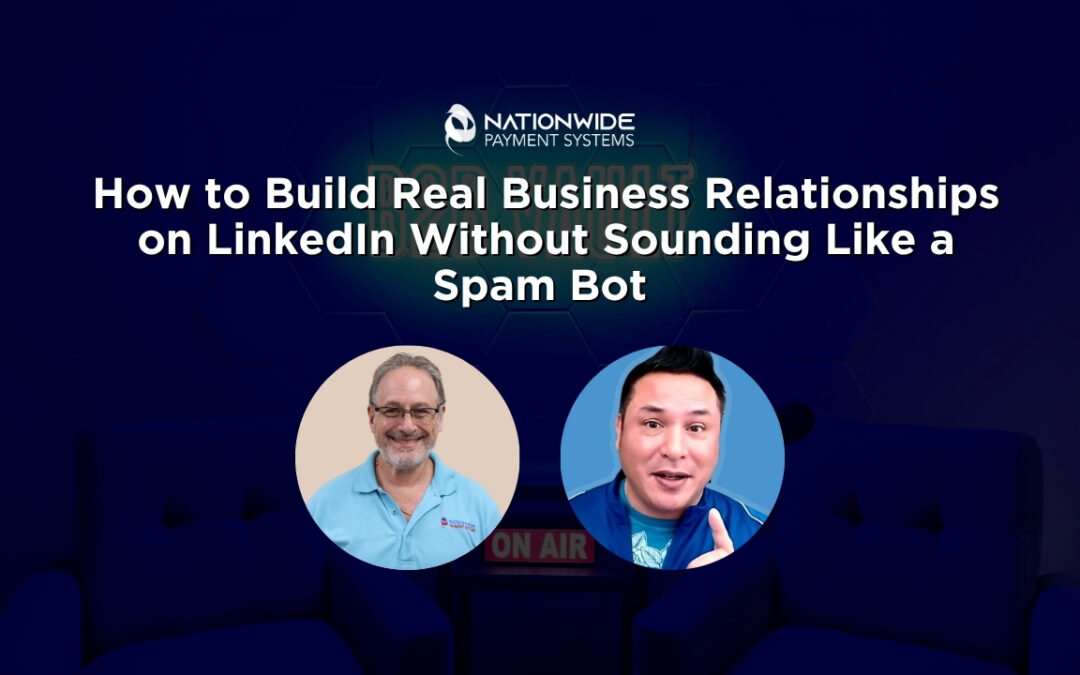
On this episode of B2B Vault: The Biz to Biz Podcast, hosted by Allen Kopelman and powered by Nationwide Payment Systems, Allen sat down with Troy Hipolito, founder of Skoop, to talk about LinkedIn marketing, relationship-building, personal branding, and how business owners can use LinkedIn without becoming part of the spam problem.
And this conversation hit on something every business owner, salesperson, consultant, SaaS founder, and entrepreneur needs to understand:
LinkedIn is not about blasting messages. It is about building trust at scale.
sponsored by

What Is Skoop?
Troy created Skoop as a LinkedIn relationship-building tool designed to help professionals communicate in a more personal, human way.
Skoop is built around a simple idea:
Most LinkedIn conversations contain repeatable pieces of information, but the interaction still needs to feel personal.
Instead of sending the same boring canned message to every new connection, Skoop helps users combine reusable text, short, personalized videos, and smart follow-up reminders.
Troy described it as a tool that helps people build better relationships with less wasted time.
That matters because LinkedIn users are tired of automation.
They can smell a fake sequence from a mile away.
They know when a message was blasted out by a bot.
They know when someone did not read their profile.
They know when the sender is not interested in a real conversation.
Skoop tries to solve that problem by helping users add context, personality, and effort back into LinkedIn messaging.
The Big LinkedIn Mistake: Treating People Like Transactions
One of the strongest points Troy made during the episode is that LinkedIn should not be treated like a purely transactional platform.
Too many people connect with someone and immediately pitch them.
That is like meeting someone at a networking event, shaking their hand, and instantly asking them to buy something before they even know who you are.
It does not work.
Troy compared good LinkedIn relationship-building to slow dating.
That may sound funny, but it makes sense.
In dating, if someone wants a real relationship, they do not usually start by demanding commitment in the first message. They get to know the person. They listen. They look for alignment. They build trust.
Business works the same way.
Before someone gives you $500, $5,000, $50,000, or $500,000, they need to believe you are credible. They need to understand what you do. They need to feel like there is a reason to keep the conversation going.
That takes more than a pitch.
It takes relationship-building.
Why LinkedIn Spam Is Getting Worse — And Also Easier to Beat
Allen pointed out something many LinkedIn users have noticed recently:
The spammy automated messages seem to be slowing down.
That is likely because LinkedIn has been cracking down on automation tools and messaging bots. Since LinkedIn is owned by Microsoft, it has the technology and motivation to reduce obvious automation abuse on the platform.
But here is the opportunity:
When everyone else is sending lazy automated messages, a real human message stands out.
A short, personalized video stands out.
A thoughtful comment stands out.
A message that proves you looked at someone’s profile stands out.
The bar is low because so many people are doing it badly.
That gives serious professionals a massive advantage.
Troy’s “Sandwich” Method for LinkedIn Messaging
One of the best tactical ideas Troy shared was what he calls a “sandwich” approach to LinkedIn messaging.
The basic structure is:
- A short written message for context
- A quick personalized video
- A title or personalization element using the person’s name.
The written message gives the recipient a reason to understand what the video is about.
The video creates trust because it feels human and personalized.
The name or title reinforces that the message was made specifically for them.
That combination matters because people are cautious. Nobody wants to click on a random link with no explanation. Nobody wants to watch a video that feels generic. Nobody wants to feel like they are just another name in a sequence.
But when someone sees a short message, a real video, and their name attached to it, it creates a different experience.
It feels intentional.
And in business development, intentional beats automated almost every time.
Personalized Video Can Dramatically Improve LinkedIn Conversions
Troy shared that before using his personalized video approach, his conversion rate from a single LinkedIn message to a vetted booked meeting was around 3%.
After adding personalized video through Skoop, he said that number increased to around 21%.
That is a major difference.
The important lesson is not just “use video.”
The real lesson is:
People respond when they believe you put actual effort into the interaction.
A polished corporate video may not work as well as a quick raw video that looks like it was created just for that person.
Why?
Because raw feels real.
And real builds trust.
Your LinkedIn Profile Is Probably Costing You Opportunities
Troy gave a strong warning that many people do not want to hear:
Your LinkedIn profile may be hurting you.
When someone connects with you, comments on your post, likes your comment, or considers booking a call, one of the first things they do is look at your profile.
If your profile is confusing, vague, outdated, or too focused on yourself instead of the customer, you lose opportunities.
Your LinkedIn profile should clearly answer:
What do you do?
Who do you help?
How do you help them?
Why should they care?
Troy recommended repeating that message throughout the profile in different ways — in the banner, headline, about section, featured section, and content.
That clarity helps attract the right people and push away the wrong ones.
That is not a bad thing.
A good LinkedIn profile should act like a filter.
Personal Brand Beats Company Brand on LinkedIn
Allen shared an experiment he ran with Nationwide Payment Systems and B2B Vault.
Instead of focusing only on company pages, he shifted more energy into posting from his personal LinkedIn profile.
The result?
His personal profile grew significantly faster.
That is because people connect with people.
Company pages are of value. They help with credibility, search, retargeting, brand presence, and company updates.
But on LinkedIn, the real engagement usually happens through personal profiles.
People want to know the founder.
They want to know the CEO.
They want to know the expert.
They want to see the human side.
That means business owners should not hide behind their company logo.
They should build a personal brand that supports the company brand.
For Allen, that means sharing business content, payment industry insights, podcast episodes, personal observations, and even occasional personal content like posts about his dog, Rocky.
Because people do business with people they know, like, and trust.
Commenting on Other People’s Posts Is a Hidden LinkedIn Growth Strategy
One of the most practical parts of the conversation was about commenting.
Allen mentioned that he started using Skoop to comment on posts from well-known people on LinkedIn.
This strategy matters because commenting on a popular post can sometimes get more visibility than posting on your own profile.
Think about it.
If someone like Gary Vaynerchuk, Mark Cuban, or Kevin O’Leary posts something and thousands of people see it, a smart comment underneath that post can put you in front of an audience that may have never discovered you otherwise.
That does not mean dropping spam in the comments.
It means adding something useful.
A good comment can:
- Show expertise.
- Start conversations.
- Attract profile views.
- Generate connection requests.
- Lead to new relationships.
- Create visibility with people in your target market.
This is one of the most underused LinkedIn strategies.
Most people only post.
Smart people post and comment strategically.
LinkedIn Is Not Just Posting — It Is a System
Another key point from Troy was that LinkedIn success does not come from one random action.
It comes from a system.
That system can include:
- Profile optimization
- Daily commenting
- Personal posts
- Direct messages
- Personalized video
- Follow-up reminders
- Email nurturing
- Events or webinars
- Podcast appearances
- LinkedIn Live
- Retargeting conversations
- Relationship tracking
This is where many business owners get stuck.
They think LinkedIn is just posting content.
But posting is only one part of the machine.
The real opportunity happens when content creates conversations, conversations create trust, and trust creates business.
That is the system.
Why Free Value Matters
Troy also talked about the importance of building a value structure.
Not everyone is ready to buy your most expensive service immediately.
Some people need to consume your free content first.
Others may start with a low-cost product.
Others may eventually graduate into a premium service.
That is why smart businesses create different levels of value.
For example:
Free value:
Posts, podcasts, videos, webinars, comments, guides, checklists, and quick advice.
Low-cost offer:
A software subscription, short consultation, mini audit, starter package, or introductory service.
High-ticket offer:
Full consulting, implementation, done-for-you services, enterprise programs, or strategic partnerships.
The key insight Troy shared was powerful:
When people pay even a small amount, they pay more attention.
That is why a low-cost offer can be a great bridge between free content and a larger business relationship.
Allen’s Advice: Block Time Every Day for Social Media
Allen added a very practical tip for business owners:
Block out 30 minutes to one hour every day to work on social media.
That does not mean wasting time scrolling.
It means intentionally building visibility.
During that time, you can:
- Post on LinkedIn
- Comment on relevant posts
- Respond to messages.
- Connect with potential partners.
- Share a podcast clip.
- Repurpose content.
- Record a short video.
- Engage with people in your industry.
Business owners often say they do not have time for social media.
But the truth is, your prospects are checking you out online before they call you.
They may search your name on Google.
They may look you up on LinkedIn.
They may ask ChatGPT, Perplexity, Gemini, Claude, or Copilot about you.
They may review your podcast, website, videos, articles, and social presence before they ever book a meeting.
That means your online presence is no longer optional.
It is part of your reputation.
The Future of Business Development Is Human + Systemized.
The big takeaway from this episode is that business development is changing.
Automation alone is not enough.
AI alone is not enough.
Posting once in a while is not enough.
Cold pitching strangers is definitely not enough.
The future belongs to business owners who combine systems with humanity.
Use tools.
Use AI.
Use video.
Use content.
Use LinkedIn.
But do not forget the relationship.
That is where the money is.
That is where trust is built.
That is where real business happens.
About Troy Hipolito and Skoop
Troy Hipolito is the founder of Skoop, a LinkedIn relationship-building tool designed to help professionals create personalized videos, reuse key messaging, comment more effectively, create content, and manage important follow-ups.
Skoop helps users save time while making their LinkedIn interactions feel more personal, thoughtful, and human.
You can learn more about Skoop at:
skoopapp.com
About B2B Vault: The Biz to Biz Podcast
B2B Vault: The Biz to Biz Podcast is hosted by Allen Kopelman and powered by Nationwide Payment Systems.
The podcast features conversations with entrepreneurs, fintech leaders, business owners, sales professionals, software founders, marketing experts, and innovators who are helping businesses grow.
Each episode is designed to give business owners practical education on entrepreneurship, payments, marketing, sales, technology, finance, and the tools they need to compete in today’s market.
To learn more about Nationwide Payment Systems, visit:
nationwidepaymentsystems.com
Key Takeaways from This Episode
LinkedIn is a relationship platform, not just a sales platform.
Personalized messages outperform generic automated messages.
Short, personalized videos can increase trust and response rates.
Your LinkedIn profile needs to clearly explain what you do, who you help, and why it matters.
Personal branding often creates more engagement than company branding.
Strategic commenting on other people’s posts can generate visibility.
Business owners should spend dedicated time every day building their online presence.
The future of business development is not automation versus human connection. It is automation supporting human connection.