Sponsored by NPS One — Nationwide Payment Systems
B2B Vault · The Biz2Biz Podcast · Episode Recap
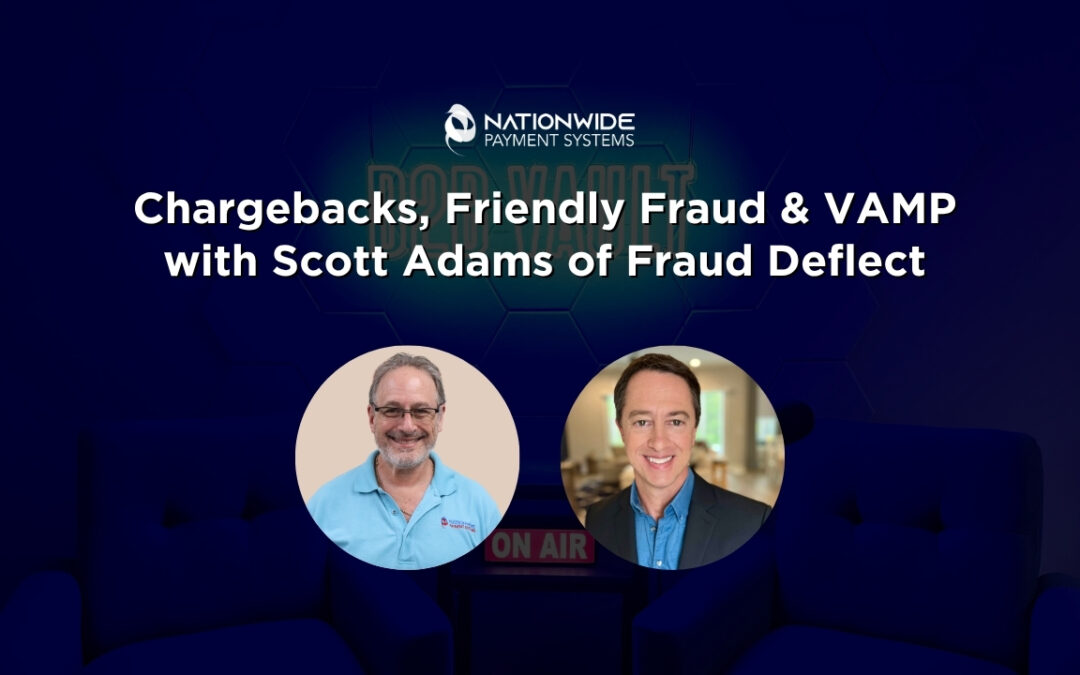
Chargebacks, Friendly Fraud & VAMP: What Every Merchant Needs to Know
Scott Adams, CEO and co-founder of Fraud Deflect, joins host Allen Kopelman to break down the chargeback epidemic — and the real-time deflection technology that stops disputes before they ever become a problem.
Hosted by Allen Kopelman · Guest: Scott Adams. · Powered by Nationwide Payment Systems
This Episode's Guest
Scott Adams CEO & Co-Founder, Fraud Deflect · 25+ Years as Merchant & Entrepreneur Former fraud lead at Riot Games (League of Legends) & Epic Games (Fortnite)
AI OVERVIEW
On this episode of B2B Vault: The Biz2Biz Podcast, host Allen Kopelman sat down with Scott Adams — a 25-year merchant-turned-fraud-expert who has tackled chargebacks at some of the biggest gaming companies in the world — to talk about what merchants of every size can do to protect their business. Whether you sell physical goods, digital products, or SaaS subscriptions, this conversation is packed with actionable insight.
sponsored by

From Engineer to Fraud Fighter — Scott's Story
Scott Adams didn't set out to become a payments and fraud specialist. He started as an engineer, got into e-commerce at the right moment, and ended up running a company he inherited from a husband-and-wife team who had stumbled onto the internet and didn't know what to do when business exploded. That's when chargebacks first entered his life — and they never really left.
He grew that business from roughly $4 million to $25 million a year before exiting, then took his expertise to Riot Games, where he helped bring League of Legends' chargeback rate from out-of-control to near-zero. From there he moved to Epic Games, where Fortnite presented the same core problems at an even larger scale. Along the way, he helped build a business around Visa's VMPI program — which was later acquired by Equifax — before eventually founding Fraud Deflect with a single clear mission: give merchants the tools to stop chargebacks before they start.
"You can be a million-dollar-a-year company or a billion-dollar-a-year company. It's the same problems — just different number of zeros." — Scott Adams, CEO, Fraud Deflect
Physical vs. Digital: Two Different Battlegrounds
Allen opened the conversation by drawing the distinction between physical and digital goods merchants — a line that matters enormously when it comes to fraud prevention strategy. For physical goods sellers, shipping to freight forwarders, mailbox stores, or ghost addresses is a major red flag. If you're not shipping to a real, verifiable address, you're likely not shipping to a real customer. Allen recalled a cigar merchant who received an order for 10 humidors — an obvious prompt to pick up the phone and verify before shipping anything.
For digital goods merchants, the calculus is different. The incremental cost of a fraudulent transaction is low, and the worst outcome is typically a refund. Scott's advice: unless you're already in chargeback trouble, err on the side of your customer. Give them a good experience. He illustrated this with a now-legendary story from his Riot Games days — a customer ordering thousands of dollars in in-game currency who turned out to be a prince from Abu Dhabi stocking up on gifts for his entourage before the holidays. A video call confirmed it was real. They let it through. No chargeback, and a very happy loyal fan.
Pre-Auth, Post-Auth, and the Settlement Window
One of the most practical segments of the conversation focused on the mechanics of authorization and settlement — and how merchants can use that window strategically. Scott's framework is straightforward: think in two phases, pre-auth and early post-auth.
Pre-auth is where business rules live. Does this order fit what 99% of your orders look like? Is the quantity unusual? Does the dollar amount make sense? If something is outside the norm, flag it for manual review rather than letting it sail through. For physical goods especially, a few minutes of review before you ship can save you an expensive chargeback fight later.
Post-auth is where the settlement window matters. Most merchants have roughly 12 hours between authorization and settlement — time to review flagged transactions and void the ones that don't check out. Allen shared how one client set up a queue for all transactions over a certain dollar threshold: the gateway would authorize but not settle, giving the team a window to call or email the customer, verify, and either release or void. The key rule: void it, don't refund it. If the transaction hasn't settled, a void is clean and free. A refund after settlement costs you the processing fee — and that money doesn't come back.
"Don't let them go through and then issue a refund. You paid that juice. You're not getting that money back." — Allen Kopelman, Host, B2B Vault
Descriptors: The Easiest Win Most Merchants Ignore
Scott shared a case study that still impresses him: when he joined Epic Games, the credit card descriptor simply read "Epic Games." At the time, nobody knew who Epic was — but everyone knew Fortnite. Parents were seeing an unfamiliar name on their statement, assuming fraud, and calling their bank. The solution was straightforward: update the descriptor to something the consumer would recognize.
Allen doubled down on this point from his own client experience. One merchant with multiple digital products was able to reduce chargebacks by 95% simply by setting up dynamic descriptors — so that each product showed up on the statement with its own recognizable name rather than a generic corporate label. Both Allen and Scott also stressed including a phone number in the descriptor. If a confused customer can call you before filing a dispute, the chargeback never happens.
What Makes Fraud Deflect Different: Real-Time Deflection
The centerpiece of Fraud Deflect's platform is what Scott calls deflection — the ability to share rich transaction data with the card issuer in real time, at the exact moment a cardholder calls to dispute a charge, before a chargeback is ever filed.
When a cardholder calls their bank to dispute a transaction today, the bank rep sees almost nothing — just a corporate name and a dollar amount. Fraud Deflect changes that equation by passing hundreds of data fields to the issuer in real time: the consumer's name, email, the website they purchased from, the full shopping cart contents, and more. Instead of a blank screen, the bank rep now has enough information to walk the customer through what they actually bought — and in many cases, resolve the confusion on the spot. The cardholder hangs up. No dispute is filed. No chargeback hits the merchant's account.
The same system works when a refund has already been issued but the issuer hasn't processed it yet. Fraud Deflect can tell the issuer in real time that a refund is in transit, along with the tracking reference number, giving the bank rep everything they need to tell the customer to wait a few days rather than file a dispute. It's a problem that happens far more often than merchants realize — payment systems are not as instantaneous as consumers expect, and the lag between a merchant issuing a refund and an issuer seeing it can be days or even weeks for international transactions.
Understanding VAMP — And Why It Matters to Every Merchant
VAMP — Visa's Acquirer Monitoring Program — is one of those topics that most merchants have never heard of until it's too late. Allen broke it down simply: if an acquiring bank's VAMP rate goes too high, that doesn't just affect the bank — it flows down to the ISOs that bank sponsors, and from there to every merchant those ISOs support. It is, as Allen put it bluntly, a situation where everything rolls downhill.
Scott agreed that the current VAMP structure is not particularly fair to merchants, but the reality is what it is. The solution is to attack chargeback and fraud rates proactively — before they become a problem at the acquirer level. That's exactly what Fraud Deflect's deflection technology is designed to do: drive those rates down at the source, before disputes ever reach the card networks.
Advice for New Business Owners: Start Right
Both Scott and Allen closed the episode with the same fundamental message: don't wait until you have a fraud problem to think about fraud prevention. The time to put the right payment processor and fraud protection in place is day one, not after your merchant account gets shut down.
Scott pointed out something many entrepreneurs don't realize: when a merchant goes out of business or gets hit with a wave of chargebacks they can't cover, it's not Visa or Mastercard absorbing the loss — it's the ISO or acquirer that sponsored the account. That's why a payment processor who asks a lot of questions and requests documentation isn't being difficult. They're doing due diligence that protects both of you.
Allen added that working with a processor who understands your specific industry matters enormously. The rules around advertising brand names, compliance requirements, checkout page standards — these things vary by business type, and a generalist payment provider won't always flag problems before they become account-threatening issues.
Key Takeaways from This Episode
-
Physical and digital goods require different fraud strategies — digital merchants should generally err on the side of the customer when risk is low.
-
Use the authorization-to-settlement window strategically: flag unusual orders, review them, and void (not refund) the ones that don't check out.
-
Your billing descriptor is one of the most powerful — and most overlooked — chargeback prevention tools available. Make it recognizable, and include a phone number.
-
Real-time deflection technology can stop disputes before they ever become chargebacks by sharing transaction data with the issuer during the customer service call.
-
VAMP rates affect the entire payment chain — high chargeback and fraud rates at the merchant level can ripple up to ISOs and acquirers.
-
Pre-auth business rules should reflect your 99% — flag anything that falls outside the normal pattern for your business.
-
Issuing a refund and filing a void are not the same thing. If the transaction hasn't settled, void it — you won't pay the processing fee.
-
Identity theft is at an all-time high. Monitor your business and personal credit actively, and set up alerts for inquiries and new accounts.
-
Get a good payment processor and fraud partner from day one. Prevention is always cheaper than remediation.
-
Attend a payments industry conference at least once every few years — the relationships and knowledge pay dividends for your business.
To connect with Scott Adams and learn more about how Fraud Deflect helps merchants stop chargebacks before they start, visit
B2B Vault: The Biz2Biz Podcast is hosted by Allen Kopelman and powered by Nationwide Payment Systems and their all-in-one payment platform, NPS One — built to help businesses handle payment processing, e-commerce, and invoicing smarter and faster. Learn more at
B2B Vault · The Biz2Biz Podcast
Watch the episode: