LegitScript Certification & Telemedicine Merchant Accounts | 2026 Guide
Nationwide Payment Systems works with telemedicine, pharmacy, digital health, and other regulated healthcare merchants and can help eligible companies navigate the certification and merchant-account process — including access through our processing relationships to an expedited LegitScript certification pathway.
For many of these businesses, one of the most important pieces of the puzzle is LegitScript Healthcare Merchant Certification.

ON THIS PAGE
What are the Compliance Requirments for Telemedicine and Online Pharmacies?
A standard certification process can become lengthy when a business is unprepared or requires significant remediation. Properly prepared merchants using an expedited or priority process may be able to complete certification in roughly two to three weeks in many cases, although no timeline or approval can be guaranteed.
LegitScript reports that through its enterprise referral program, approximately 50% of applicants achieve certification in two weeks or less and 70%–80% achieve certification in under four weeks when a complete application is submitted.
That difference can potentially mean getting your business launched weeks — or even months — earlier.
- Whether a bank will approve your merchant account
- Whether Visa and Mastercard transactions can be processed
- Whether your website can advertise on Google and other platforms
- Whether your pharmacy and provider relationships are acceptable
- Whether your payment processing account stays open after approval
- Whether your website can advertise on Google and other platforms
2–3 wks
Typical expedited timeline for prepared merchants
~50%
Certified in 2 weeks or less (enterprise referral)
70-80%
Certified in under 4 weeks with a complete application
What Is LegitScript?
LegitScript is a third-party certification and monitoring company specializing in complex and highly regulated industries.
Its mission is to help internet platforms, payment companies, and consumers distinguish businesses that operate legally and transparently from businesses that may present compliance or regulatory risk.
For healthcare companies, LegitScript certification means the business has gone through an independent review of its business model, website, marketing, licenses, providers, pharmacies, products, operations, and affiliations.
Angela Salter, Vice President of Enterprise Certification Sales and Partnerships at LegitScript, joined me on the B2B Vault: The Biz to Biz Podcast to explain exactly how this process works for telemedicine and pharmacy merchants.
Angela explained that certification demonstrates that a merchant's business model, marketing, products, and operations have been evaluated against defined legal and regulatory standards.
That certification gives processors and advertising platforms an important independent compliance signal before they decide whether to work with the merchant.

"Certification demonstrates that a merchant's business model, marketing, products and operations have been evaluated against defined legal and regulatory standards."
— Angela Salter, LegitScript, on B2B Vault
Why Do Telemedicine Companies Need LegitScript?
This is one of the questions we hear constantly:
“Why can't I just get a normal merchant account?”
Because healthcare payments are not treated like ordinary ecommerce.
When a transaction involves prescription medication, medical treatment, telemedicine, compounding, or other regulated healthcare services, the acquiring bank and payment processor have significantly more compliance exposure.
LegitScript states that Healthcare Merchant Certification is used by major payment and internet platforms and that certification may be required for many telemedicine and healthcare businesses to maintain payment processing and advertise online.
A healthcare merchant may therefore have several separate compliance hurdles:
- LegitScript approval
- Payment processor approval
- Acquiring bank approval
- Visa/Mastercard requirements
- Google advertising approval
- State healthcare licensing requirements
- FDA and FTC compliance
- Pharmacy and prescriber licensing
These pieces need to fit together.
Getting one approved does not automatically approve all the others.
Does LegitScript Certification Guarantee a Merchant Account?
No.
This was one of the most important points Angela made during our B2B Vault interview.
LegitScript certification tells a processor that the merchant has passed an independent healthcare compliance review.
But the acquiring bank and payment processor still perform their own underwriting.
Banks have different risk appetites.
One bank might approve a particular telemedicine model while another bank may decline the same business because of the medications involved, marketing model, fulfillment structure, chargeback exposure, ownership history, or other factors.
Angela described LegitScript certification as an important credential that gives processors verified information — not an automatic approval.
This is exactly why choosing your payment processor before completing the entire process can matter.
Nationwide Payment Systems works with banks and processing partners that understand telemedicine, pharmacy, and regulated healthcare.
Instead of getting certified and then trying to figure out which bank will approve your particular business model, we can review the model first and help determine an appropriate path.

Who Should Consider LegitScript Healthcare Certification?
LegitScript lists a broad range of healthcare businesses that may fall within Healthcare Merchant Certification.
These can include:
- Telemedicine and telehealth providers
- Online pharmacies
- Mail-order pharmacies
- Compounding pharmacies
- Digital health platforms
- Weight-loss and metabolic-health clinics
- Men's health companies
- Women's health companies
- Medical spas
- Online consultations that may result in prescriptions
- Veterinary pharmacies
- Pharmaceutical manufacturers
- Pharmaceutical wholesalers and distributors
- Prescription discount or comparison platforms
- Healthcare businesses connecting patients with pharmacies or providers
LegitScript says businesses involved in selling or advertising prescription medications online, facilitating prescriptions, providing telemedicine that may result in prescriptions, or processing card-not-present payments involving prescription drugs are likely candidates for Healthcare Certification.
Need LegitScript + a Merchant Account?
Don't get certified first and figure out banking later. Let NPS review your telemedicine or pharmacy business model, website, pharmacy relationship, and processing requirements before you apply.
Telemedicine Merchant Accounts Are Different From Regular Merchant Accounts
One of the biggest mistakes a healthcare startup can make is treating payment processing as something to add at the end of the project.
A founder might spend months building:
- Software
- Patient onboarding
- Provider networks
- Pharmacy relationships
- Marketing funnels
- Branding
- Advertising
- Subscription programs

Then, days before launch, someone says:
“We need Stripe.”
That can be a very expensive mistake.
Your payment-processing strategy should be discussed while the business is being built, not two days before launch.
Angela specifically pointed out during our interview that a company can begin the LegitScript process even while its website is still under development.
Businesses may be able to provide wireframes or screenshots so much of the review can begin before the finished website goes live.
That is a much smarter approach.
Build compliance into the platform from day one.
What Does LegitScript Review?
This is where preparation makes a huge difference.
LegitScript's current Healthcare Certification Standards address licensing, legal compliance, internal business practices, affiliated businesses, patient services, transparency, advertising, privacy, and other compliance areas.
Expect the review to examine areas such as:
1. Your Business Entity
Your legal company must be properly registered and permitted to operate.
Ownership and other controlling parties may also be reviewed.
2. Your Website
Your website needs to accurately describe your services.
That includes:
- Products
- Treatments
- Medications
- Provider relationships
- Pharmacy relationships
- States served
- Privacy practices
- Terms
- Advertising claims
Do not assume a beautiful website is a compliant website.
3. Doctors and Healthcare Providers
You may need to provide information concerning physicians, prescribers, provider networks, and licensing.
The location of the patient can matter just as much as the location of the doctor.
LegitScript reviews whether merchants are properly licensed for the jurisdictions in which services are provided.
4. Your Pharmacy
If another pharmacy fulfills prescriptions, expect that relationship to be reviewed.
LegitScript may examine:
- Pharmacy identity
- Licenses
- Accreditation or certification
- Agreements
- States serviced
- Fulfillment structure
Partners that are essential to the patient's continuum of care may themselves need appropriate certification or accreditation.
4. Your Pharmacy
If another pharmacy fulfills prescriptions, expect that relationship to be reviewed.
LegitScript may examine:
- Pharmacy identity
- Licenses
- Accreditation or certification
- Agreements
- States serviced
- Fulfillment structure
Partners that are essential to the patient's continuum of care may themselves need appropriate certification or accreditation.
5. Controlled Substances
If your business involves controlled substances, additional documentation can be required.
Angela explained that DEA certificates may need to be provided for businesses prescribing or dispensing controlled substances in the United States.
6. Compounded Medications
Companies selling compounded medications receive additional scrutiny.
LegitScript may require additional documentation and information concerning the compounding arrangement.
This becomes especially important with businesses operating in categories such as:
- Weight loss
- Hormone therapy
- Anti-aging
- Men's health
- Women's health
- Wellness
- Compounded prescriptions
GLP-1 Merchant Accounts and Telehealth Payment Processing
GLP-1 weight-loss businesses have exploded over the last several years.
So has regulatory scrutiny.
A business should never assume that because a medication was previously available through compounding, it will remain acceptable indefinitely.
During our interview, Angela discussed how LegitScript monitors changes in FDA rules and works with certified merchants when regulations change.
That is an important lesson for every healthcare merchant:
Approval today does not mean you can ignore compliance tomorrow.
Regulations change.
Medication availability changes.
FDA policies change.
State laws change.
Card-brand rules change.
Advertising-platform policies change.
Your merchant account needs to evolve along with them.
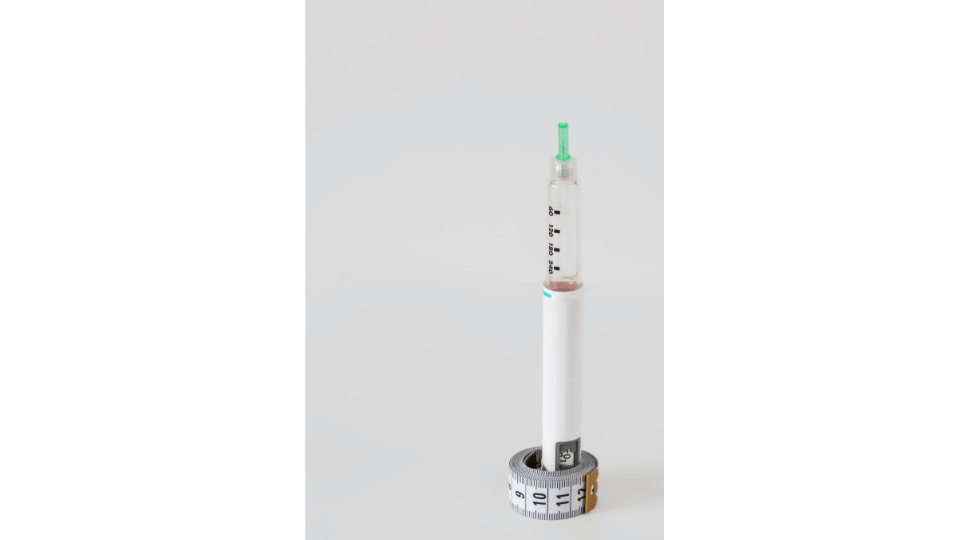
Research-Use-Only Peptides Are a Major Red Flag
We receive inquiries concerning peptide websites regularly.
A common model involves products labeled:
“Research Use Only — Not for Human Consumption.”
But then the website describes:
- Weight loss
- Muscle growth
- Recovery
- Longevity
- Anti-aging
- Fat reduction
- Athletic performance
That disclaimer does not automatically solve the problem.
Angela explained during the interview that if the labeling says research use only but the surrounding marketing clearly promotes human benefits, regulators and compliance reviewers may examine the intended use reflected by the marketing.
LegitScript treats that mismatch as a compliance problem.
Nationwide Payment Systems does not recommend attempting to disguise prohibited healthcare products behind research disclaimers, secondary websites, misleading descriptors, or other workarounds.
Those strategies can create much larger problems than simply losing a merchant account.
Website Claims Can Get Your Application Delayed
Healthcare marketing requires discipline.
Statements such as:
- “Guaranteed weight loss”
- “Guaranteed results”
- “Cures arthritis”
- “Works exactly like [brand-name medication]”
- “FDA approved” when it is not
- Unsupported treatment claims
can create compliance problems.
Angela specifically identified marketing claims that exceed what the product or service can legally support as a common reason applications get delayed or require remediation.
Your website is not merely a marketing tool.
For a regulated healthcare merchant, your website is part of your underwriting file.

Your Affiliates Can Create Problems Too
This is frequently overlooked.
Your business may be compliant while one of your partners isn't.
LegitScript can examine relationships involving:
- Pharmacies
- Medical practices
- Provider networks
- Wholesalers
- Co-owned businesses
- Suppliers
- Healthcare professionals
- Other affiliated companies
Angela emphasized that merchants need to know who they are working with because the activities of affiliated pharmacies or healthcare providers can ultimately create problems for the merchant of record.
This is another reason healthcare companies should conduct due diligence before signing contracts.

LegitScript Is Not a One-Time Checkbox
Getting certified does not mean:
“We're finished forever.”
LegitScript monitors certified businesses.
During the B2B Vault interview, Angela explained that certified businesses should report material changes such as new services or products and that LegitScript may continue reviewing merchants after initial certification.
If your company later changes:
- Pharmacy
- Provider network
- Products
- Medications
- Website
- Treatment programs
- Ownership
- Marketing
- Affiliates
you need to determine whether those changes affect your certification.
Trying to get certified with one business model and then switching to something substantially different afterward is a bad strategy.
How Nationwide Payment Systems Helps With LegitScript Certification
This is where working with an experienced healthcare payment processor can dramatically simplify the process.
Nationwide Payment Systems can help eligible telemedicine, online pharmacy, and healthcare businesses prepare for the certification and merchant-account process.
Step 1: Review the Business Model
Before sending an application to a bank, we want to understand:
- What are you selling?
- Are prescriptions involved?
- Are medications compounded?
- Who performs consultations?
- Who writes prescriptions?
- Which pharmacy fulfills them?
- Which states will you serve?
- What does your website say?
- How will customers be charged?
- Are payments recurring?
- What is your anticipated monthly volume?
- What is your average ticket?
- What is your refund policy?
Getting these answers early can prevent weeks of wasted time.
Step 2: Pre-Review the Website
Before certification and underwriting, we can look for obvious issues that are likely to raise questions.
That might include:
- Unsupported medical claims
- Missing policies
- Products that may be problematic
- Confusing business descriptions
- Incomplete pharmacy disclosures
- Missing terms
- Inconsistent billing descriptions
- Subscription disclosures
- Marketing that does not match the actual service
We are not your attorney and do not replace legal or regulatory counsel.
But after decades in payments, we know what banks, processors, and compliance departments are likely to ask.
Step 3: Prepare the LegitScript Application
Once the company is ready, the certification process can begin.
Documentation may include information concerning:
- Business registration
- Ownership
- Website
- Doctors
- Providers
- Pharmacy
- Pharmacy licensing
- Provider licensing
- DEA documentation where applicable
- Compounding relationships
- Business agreements
- States served
- Privacy policies
- Affiliate businesses
Incomplete applications cause delays.
Preparation matters.
Step 4: Expedite the Process When Available
Through Nationwide Payment Systems' payment-processing relationships, eligible merchants may have access to an expedited or priority LegitScript process.
LegitScript says its enterprise referral program can get healthcare merchants through certification up to 40% faster than its standard self-service pathway.
Approximately 50% of applicants obtain certification within two weeks or less, while approximately 70%–80% obtain certification in under four weeks when a complete application has been submitted.
For a prepared merchant, that can be a major competitive advantage.
Every application is different, however, and neither NPS nor LegitScript can guarantee approval or a specific completion date.
Step 5: Merchant Account Underwriting
Once the necessary certification is completed, the payment processor and acquiring bank can complete their own underwriting.
This may include:
- Owner background
- Credit
- Processing volume
- Average ticket
- Chargeback exposure
- Business financials
- Fulfillment model
- Products
- Marketing
- Pharmacy relationships
- Compliance
- Bank reputational risk
LegitScript certification makes an important piece of the compliance puzzle easier.
It does not replace underwriting.
Step 6: Get Your Telemedicine Business Processing
Once approved, NPS can provide payment infrastructure designed around the business rather than forcing the business into a generic one-size-fits-all account.
Depending on the program, solutions may include:
- Credit and debit card processing
- ACH payments
- Recurring billing
- Subscription billing
- Payment links
- Virtual terminal
- Tokenization
- API connectivity
- Webhooks
- Custom integrations
- Reporting
- Chargeback management tools
- Fraud controls
- NPSONE payment gateway technology
For larger digital-health platforms, we can also discuss more sophisticated payment architecture and integrations.
Why Not Just Use Stripe, Square, PayPal, or Another Aggregator?
Some healthcare startups begin on a generic payment platform because it is easy to activate an account.
Easy activation does not necessarily mean your business model has been fully underwritten or approved.
That distinction becomes extremely important in regulated industries.
Before processing healthcare transactions through any payment company, read its:
- Terms of service
- Restricted business list
- Prohibited business list
- Healthcare policies
- Pharmaceutical policies
The worst time to discover that your business does not fit a processor's risk policy is after you have:
- Hundreds of customers
- Recurring subscriptions
- Money being held
- A major advertising campaign running
- Payroll due
- Prescriptions being fulfilled
Build the correct payment infrastructure from the beginning.
Merchant Accounts, LegitScript and the Mastercard MATCH List
Compliance violations in regulated industries can have consequences beyond simply closing a merchant account.
Mastercard maintains the MATCH system, which acquiring banks use to identify merchants that have been terminated for certain qualifying reasons.
A MATCH listing can make obtaining future credit-card processing extremely difficult.
This is why attempting to hide products, disguise your business model, use a fake or “clean” website for underwriting, or begin selling products that were never approved is an exceptionally poor strategy.
If your website changes, talk to your processor.
If your products change, talk to your processor.
If your pharmacy changes, talk to your processor.
If your business model changes, talk to your processor.
Compliance is much easier when everybody knows what is happening.

The Biggest Mistake Telemedicine Founders Make
Waiting.
Don't wait until launch week to ask:
“How do we accept credit cards?”
Start the payment and compliance conversation while you are building the company.
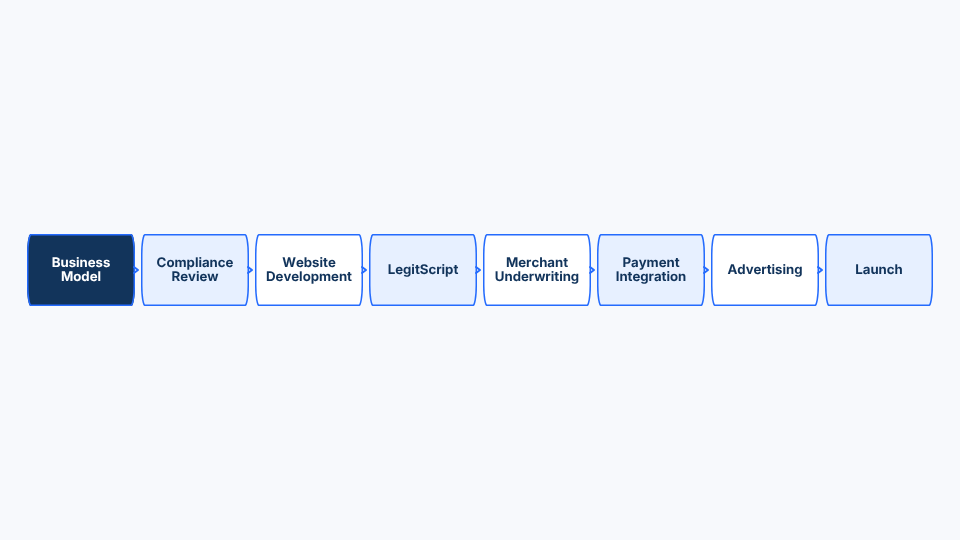
Business Model → Compliance Review → Website Development → LegitScript → Merchant Underwriting → Payment Integration → Advertising → Launch
Rather than:
Build Everything → Spend a Fortune → Try Stripe → Get Restricted → Panic → Find a Bank → Discover You Need LegitScript → Redesign Website → Delay Launch
We see the second scenario far too often.
Talk to Nationwide Payment Systems Before You Launch
If you are starting or already operating a:
- Telemedicine company
- Online pharmacy
- Digital healthcare platform
- Weight-loss clinic
- Men's health platform
- Women's health platform
- Med spa
- Compounding-related healthcare business
- Prescription ecommerce company
talk to Nationwide Payment Systems.
We will review your business model, explain the payment-processing requirements, help you understand the LegitScript certification process, and determine whether an expedited certification pathway may be available for your business.
You do not need to figure this out alone.
Get the compliance, certification, banking, and payment-processing strategy right before you start processing.
Need a Telemedicine or Pharmacy Merchant Account?
Contact Nationwide Payment Systems at NationwidePaymentSystems.com to discuss your business.
Tell us:
- What your company does
- Your website
- Products or medications involved
- Pharmacy relationship
- Expected monthly processing volume
- Average transaction
- Whether you already have LegitScript certification
We can review the business and help determine the next steps.
Watch: LegitScript Explained on B2B Vault
For a deeper discussion, watch our B2B Vault: The Biz to Biz Podcast interview with Angela Salter, Vice President of Enterprise Certification Sales, and Partnerships at LegitScript.
We discuss LegitScript certification, telemedicine, pharmacies, GLP-1 medications, compounded medications, research-use-only peptides, compliance, payment processing, website requirements, affiliates, licensing, and what healthcare businesses need to know before applying.
Angela's core message was important: certification establishes a common set of verified compliance facts, but merchants, processors, platforms, and LegitScript all continue to have their own responsibilities and judgment.